13 Black History Month Activities for the Classroom (2026)
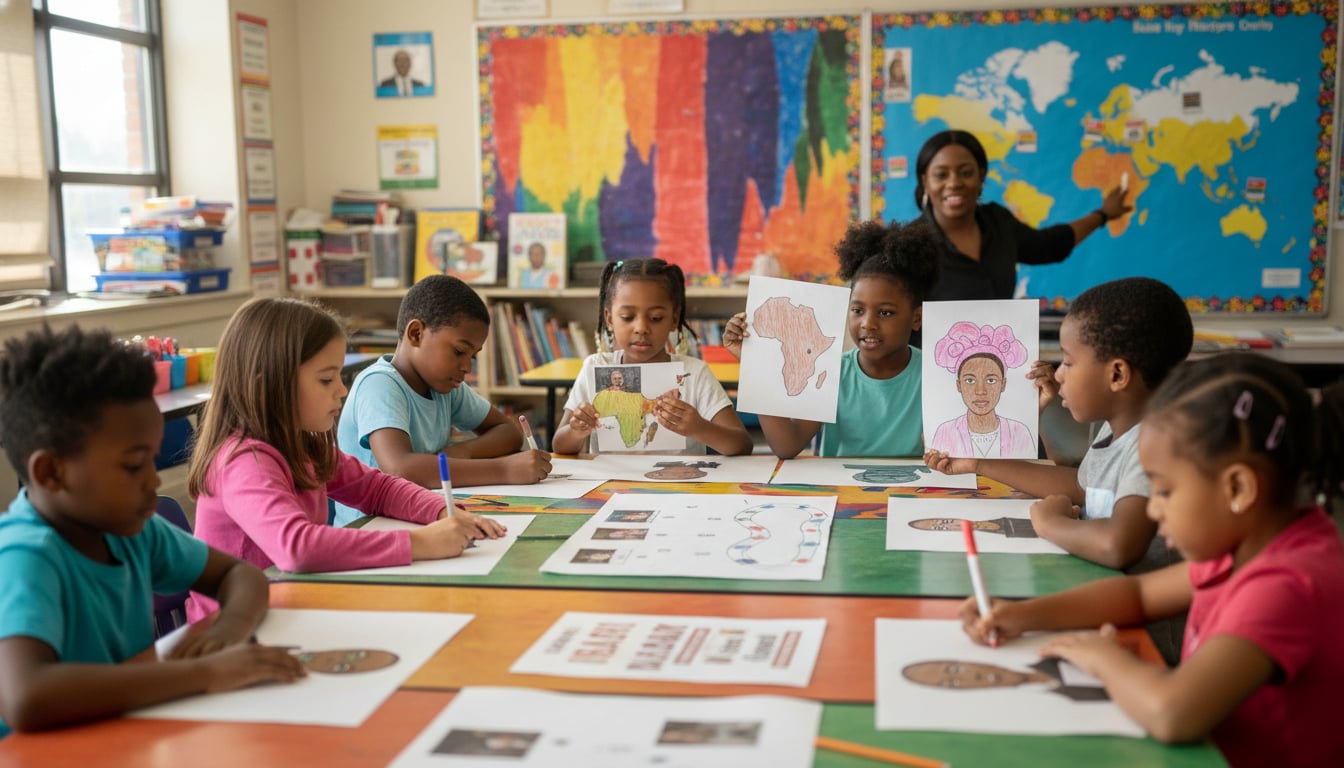
Black History Month is a dedicated time to honor the profound contributions of Black Americans to the history and culture of the United States. For educators, it presents a vital opportunity to move beyond routine lessons and create deeply engaging experiences that resonate with students. This guide provides a curated list of meaningful Black History Month activities designed to inspire curiosity, foster understanding, and celebrate a rich heritage. For structured, ready-to-teach plans, see our Black History Month lesson plan ideas guide. Finding the time to develop unique materials can be challenging, but these ideas will help you craft memorable and impactful Black History Month activities for any grade level.
Top 13 Black History Month Activities
Building on these foundational themes, the following list offers a diverse array of interactive projects designed to bring Black history to life within the classroom or community. These activities are grouped to cover a wide spectrum of learning styles, ranging from visual arts and scientific inquiry to literary analysis and historical research. Each suggestion provides a practical way to honor the achievements of Black individuals while encouraging students to reflect on the ongoing impact of their legacies.
1. Transform your classroom into a Black history museum
Turn your room into a living museum and let students become curators of Black history. With primary sources, student-written labels, and authentic audiences, this pop-up gallery deepens historical thinking and elevates student voice.
-
Grades & Time: 3–12 | 45–90 minutes
-
Materials & Prep: Primary source sets, printable label templates, cardstock; themes like STEM innovators or local resistance. Use the TeachTools Rubric Generator for assessment. Pre-select roles (docent, designer, researcher) and print exit tickets.
-
Student Steps:
- Set norms for respectful, identity-affirming discussion.
- Select a gallery theme and take on curator roles.
- Investigate sources with curator notes, highlighting evidence of impact.
- Draft object labels with context and a bold “Why it matters” statement.
- Arrange the exhibit with maps and optional QR codes to sources.
- Host a gallery walk; docents present while visitors complete exit tickets.
- Debrief: Which choices best told a fuller story—and why?
-
Check for Understanding & Differentiation:
- Assessment: Collect 3–2–1 exit tickets (see exit ticket ideas); score labels with a brief rubric.
- Differentiation/Extension: Offer sentence starters and role choice boards; invite families or another class as your authentic audience.
2. Create an encyclopedia of Black leaders
Build a class encyclopedia that surfaces the breadth of Black leadership across STEM, arts, and civic life. Students practice research, citation, and clear explanatory writing while contributing to a reference they can proudly share.
-
Grades & Time: 3–12 | 2–5 class periods (45–60 minutes each)
-
Materials & Prep: Research organizer, model entry, curated source list, and templates/rubrics via TeachTools. Ensure access to age-appropriate databases and library texts.
-
Student Steps:
- Choose a figure from a curated list or propose a local hero.
- Frame inquiry questions about impact and historical context.
- Analyze primary and secondary sources for evidence and quotes.
- Write a one-page entry with biography, key innovations, and citations.
- Publish to the class encyclopedia and share a 60-second micro-presentation.
-
Check for Understanding & Differentiation:
- Assessment: Use a writing/research rubric with citation checks.
- Differentiation/Extension: Provide leveled texts, sentence starters, or product choices (infographic, audio) for varied readiness and interests.
3. Conduct experiments inspired by the works of Black scientists
Anchor hands-on labs in the legacies of Black scientists—from George Washington Carver’s agricultural innovations to Katherine Johnson’s math and modeling—to connect core science concepts with real-world breakthroughs.
-
Grades & Time: 3–12 | 45–90 minutes
-
Materials & Prep: Mini-bios, lab station supplies (e.g., markers, LEDs, soap), posted safety icons, pre-portioned materials, and TeachTools CER templates.
-
Student Steps:
- Choose a station and craft a testable hypothesis.
- Run the procedure (e.g., straw rockets or conductivity tests) safely and precisely.
- Record data in tables and create a labeled graph.
- Complete a CER mini-report linking results to the scientist’s work and impact.
- Share one “nugget of impact” during a quick gallery walk.
-
Check for Understanding & Differentiation:
- Assessment: Exit ticket checks for claim-evidence-reasoning quality.
- Differentiation/Extension: Offer scaffolded data tables and sentence starters; extend with a variables challenge or design tweak.
4. Explore famous Black scientists in history
Spotlight Black excellence in STEM through a fast-paced inquiry that culminates in visual one-pagers and concise elevator pitches. Students synthesize achievements, context, and modern legacy.
-
Grades & Time: 4–12 | 45–60 minutes (optional extension day)
-
Materials & Prep: Print Research Organizers, One-Pager templates, curated bio cards (e.g., Katherine Johnson), a STEM word bank, and a rubric via TeachTools.
-
Student Steps:
- Analyze a scientist bio and capture innovations and impacts with the organizer.
- Verify claims with one additional vetted primary source.
- Design a visual one-pager featuring key contributions and milestone dates.
- Deliver an elevator pitch during a gallery walk.
- Reflect with an exit ticket on the scientist’s modern legacy.
-
Check for Understanding & Differentiation:
- Assessment: Citation and accuracy rubric.
- Differentiation/Extension: Tiered bios and sentence starters; challenge with cross-disciplinary connections.
5. Pen a persuasive essay for a new stamp design
Blend art and argument as students advocate for a commemorative stamp honoring a Black figure or movement. They research, design a symbolic sketch, and craft a polished persuasive essay.
-
Grades & Time: 6–12 | 45–90 minutes
-
Materials & Prep: Planning organizer, rubric, curated sources, symbolism slides, sketch paper, and colored pencils.
-
Student Steps:
- Select a figure or movement and gather two credible sources.
- Draft a clear thesis on why they merit a U.S. stamp.
- Sketch a symbolic design and write a short visual rationale.
- Draft a 400-word persuasive essay using rubric-aligned criteria.
- Revise for argument strength, counterclaims, and citation quality.
-
Check for Understanding & Differentiation:
- Assessment: Score with the rubric or a live pitch.
- Differentiation/Extension: Provide sentence starters; extend with counterargument research or a public display submission.
6. Showcase Black history in your school’s halls
Transform corridors into learning spaces with student-curated panels that highlight Black figures and movements. Authentic audiences drive careful sourcing, concise writing, and clear design.
-
Grades & Time: 6–12 | Two class periods + printing/hanging time
-
Materials & Prep: TeachTools templates, checklists, rubrics; vetted image banks; cardstock and tape. Secure approval for display zones before production.
-
Student Steps:
- Select a topic and craft a compelling, informative title.
- Research with at least two credible sources and log citations.
- Choose an educational-use image and write a caption explaining its legacy.
- Design a one-page panel using the template and peer-review for clarity.
- Print, mount in approved zones, and host a hallway gallery walk.
-
Check for Understanding & Differentiation:
- Assessment: Use a display rubric for accuracy, clarity, and design.
- Differentiation/Extension: Offer sentence starters or audio narration QR codes for accessibility; share highlights with families via a class newsletter.
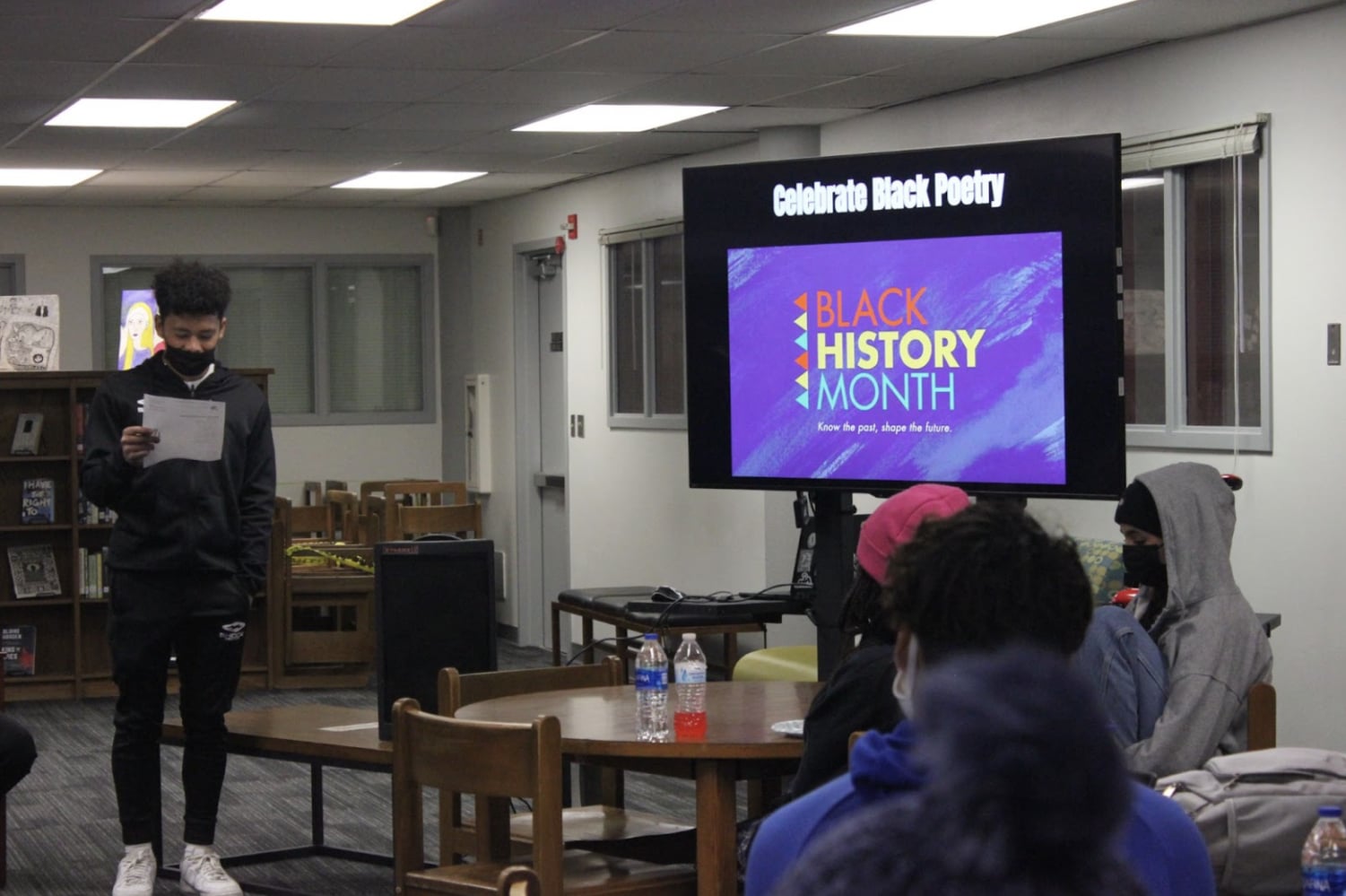
7. Host a poetry reading and recite poems from Black poets
Invite students to inhabit the music and meaning of Black poetry. Through close reading, rehearsal, and performance, they develop literary insight, interpretive choices, and stage presence.
-
Grades & Time: 3–12 | Two class periods (90 minutes)
-
Materials & Prep: A curated poem set (e.g., Hughes), an annotation guide, and a performance rubric (clarity, pacing, interpretation). Or generate targeted passages with our Academic Content tool.
-
Student Steps:
- Select a resonant poem; annotate imagery, tone, and theme.
- Research the poet’s historical context and movement.
- Mark delivery choices—pauses, emphasis, gesture—on the text.
- Rehearse with a partner using rubric feedback to refine pacing.
- Perform with a brief contextual introduction.
-
Check for Understanding & Differentiation:
- Assessment: Performance rubric with self-reflection.
- Differentiation/Extension: Provide sentence starters for intros; allow recorded submissions or duet performances.
8. Review the timeline of the civil rights movement
Have students assemble and interrogate a living timeline, using primary sources to justify sequence and significance. The result is a dynamic map of causes, effects, and turning points—with space for joy and innovation too.
-
Grades & Time: 6–12 | 45–60 minutes
-
Materials & Prep: Printable timeline cards, primary-source excerpts/QRs, markers, tape, and a TeachTools rubric for sequencing accuracy.
-
Student Steps:
- Arrange mixed event cards chronologically, citing context clues.
- Verify order using QR-linked sources or excerpts.
- Explain cause/effect across five consecutive events.
- Identify three turning points and defend your choices.
- Add “joy and innovation” cards to balance the narrative.
- Gallery walk and peer feedback on clarity and accuracy.
-
Check for Understanding & Differentiation:
- Assessment: TeachTools exit ticket on sequence and significance.
- Differentiation/Extension: Provide sentence starters; extend by adding localized historical events.
9. Create a quote gallery with words from notable Black figures
Words can lift, resist, and reframe. In this fast-moving curation, students contextualize quotations from Black leaders, artists, and innovators to illuminate themes like justice, joy, and perseverance.
-
Grades & Time: 3–12 | 45–60 minutes
-
Materials & Prep: Printable quote card templates, thematic labels, and a vetted quote bank (e.g., Harriet Tubman). Organize stations by theme.
-
Student Steps:
- Select a quote and verify speaker, date, and context.
- Paraphrase meaning and connect to a modern moment.
- Design a gallery tile with the quote, mini-bio, and theme tag.
- Gallery walk using the TAG protocol—Tell something you like, Ask a question, Give a suggestion.
-
Check for Understanding & Differentiation:
- Assessment: Exit ticket identifying theme and significance.
- Differentiation/Extension: Provide sentence starters; invite connections to local voices or current events.
10. Read books about Black history
Deepen historical empathy and knowledge with carefully chosen trade books that anchor inquiry. Short research bursts, discussion protocols, and CER writing transform reading into evidence-based understanding.
-
Grades & Time: 3–12 | 45–90 minutes (1–2 periods)
-
Materials & Prep: Curate text sets (e.g., NMAAHC recommendations). Prepare printable guides with CER sections, mini-research cards, and discussion protocol cards. Export rubrics via TeachTools.
-
Student Steps:
- Identify the book’s era and write a guiding question.
- Run a 10-minute mini-research on key people, places, and dates.
- Annotate an excerpt, boxing evidence and citing the text.
- Join a Save the Last Word discussion group.
- Write a CER paragraph answering your guiding question.
-
Check for Understanding & Differentiation:
- Assessment: Exit tickets and CER rubric review.
- Differentiation/Extension: Offer audio texts and sentence starters; provide choice boards for response formats.
11. Test students’ knowledge with our Black History Month quiz
Use a quick, leveled quiz to surface prior knowledge, spotlight misconceptions, and spark questions that drive your next lesson. It’s swift, standards-aligned, and discussion-ready.
-
Grades & Time: 3–12 | 15–20 minutes
-
Materials & Prep: TeachTools printable assessments (Version A/B), answer key, review slides, and image prompts aligned to C3 and CCSS.
-
Student Steps:
- Complete the quiz independently, inferring when unsure.
- Pair up to compare reasoning on challenging items.
- Whole-class reveal: correct answers with brief context.
- Star one new fact and write a follow-up inquiry question.
- Explain a corrected item in two sentences using source evidence.
-
Check for Understanding & Differentiation:
- Assessment: Tally accuracy by category to plan reteach.
- Differentiation/Extension: Provide word banks and sentence frames; extend with a mini–source dive for high-flyers.
12. Do a crossword puzzle on civil rights
Reinforce essential civil rights vocabulary in a focused warm-up that primes deeper study. Crossword clues, context checks, and quick reflections turn terms into usable academic language.
-
Grades & Time: 6–8 | 20–25 minutes
-
Materials & Prep: Printable crossword and key from TeachTools; term bank, highlighters, and a mini-glossary. Standards: CCSS.RH.6–8.4; CCSS.L.6–8.4.
-
Student Steps:
- Preview the word bank; star unfamiliar terms.
- Complete the puzzle using notes and context.
- Compare intersecting answers with a partner to resolve disagreements.
- Add a five-word note to two clues explaining your reasoning.
- Whole-class reveal of the toughest terms.
-
Check for Understanding & Differentiation:
- Assessment: Define one key term in your own words.
- Differentiation/Extension: Offer image-based glossaries or remove the word bank for an added challenge.
13. Complete a word search
Use a quick word search to build familiarity with names and movements that will anchor upcoming inquiry. Keep it brisk, then pivot to context so recognition becomes understanding.
-
Grades & Time: 3–8 | 15 minutes
-
Materials & Prep: Print TeachTools word searches with 12–20 curated terms, context-rich word banks, answer keys, and scaffolded grids with hints.
-
Student Steps:
- Review the word bank and circle two unfamiliar names.
- Complete the search individually or with a partner.
- Star three names and write a six-word “why it matters” caption.
- Practice pronouncing starred names using the guide.
- Submit grid and captions for a quick check.
-
Check for Understanding & Differentiation:
- Assessment: One-sentence exit ticket on impact for a starred name.
- Differentiation/Extension: Provide sentence starters or reduce the list; extend by researching one starred term for 3–4 facts.
Further Exploration: Trusted Resources and Ready-Made Lessons
Explore 26 free AI tools for teachers
Browse All Tools →Planning impactful Black History Month activities is easier when you have reliable sources. These organizations provide a wealth of primary documents, lesson plans, and accurate historical context.
Key Educational Resources
- The National Museum of African American History and Culture (NMAAHC): The museum offers a rich digital collection and specific resources for educators to bring Black history into the classroom.
- The Library of Congress: This is a fantastic source for primary documents, photographs, and exhibits related to African American history.
- Zinn Education Project: This project provides “people’s history” lessons, helping students explore history from diverse and often untold perspectives.
- Learning for Justice: Formerly known as Teaching Tolerance, this organization offers free materials to help educators teach about diversity, equity, and justice.
Once you find a compelling story or primary source, turning it into a classroom ready worksheet or quiz can take time. That’s where AI can help. With a tool like TeachTools, you can paste text from these sources to instantly generate comprehension questions, vocabulary lists, or even a full lesson plan.
Conclusion: Making Black History a Year-Round Commitment
The goal of Black History Month is to secure a firm and accurate understanding of Black history in the minds of all students. The Black History Month activities shared here serve as a starting point. The true measure of success is integrating these stories, achievements, and perspectives into the curriculum throughout the entire school year. By doing so, we ensure that Black history is not seen as separate from American history, but as an integral and inseparable part of it.
Ready to save time creating materials for your classroom? Explore how TeachTools can help you generate worksheets, quizzes, and lesson plans in minutes.
FAQ: Black History Month Activities
What are some good Black History Month activities for elementary students?
For younger students, focus on foundational stories and creative expression. Activities like reading aloud picture books by Black authors, creating artwork inspired by artists like Alma Thomas or Jean Michel Basquiat, and learning songs from the Civil Rights Movement are excellent choices.
How can I incorporate technology into my Black History Month activities?
Technology offers many avenues for engagement. Students can take virtual tours of historical sites and museums, create digital timelines of key events, or use online tools to research and present on a historical figure. You can also use AI platforms like TeachTools to quickly generate research prompts and project rubrics. For privacy guidance, consult our FERPA-compliant AI tools checklist.
Why did Black History Month start?
Black History Month was created by historian Carter G. Woodson and the Association for the Study of Negro Life and History (ASALH). They launched the first Negro History Week in 1926 to promote the achievements of Black Americans. Woodson chose February to coincide with the birthdays of Abraham Lincoln and Frederick Douglass.
How do I ensure my Black History Month activities are authentic?
To ensure authenticity, prioritize primary sources and narratives from Black creators, scholars, and historical figures. Move beyond a few famous names to showcase the breadth of Black contributions in science, the arts, politics, and more. Use resources from institutions like the NMAAHC to ground your lessons in well researched content.
When did Negro History Week become Black History Month?
The celebration was expanded to a full month in 1976, during the nation’s bicentennial. President Gerald R. Ford officially recognized Black History Month, urging Americans to “seize the opportunity to honor the too often neglected accomplishments of Black Americans in every area of endeavor throughout our history.”
What are some common mistakes to avoid?
Avoid focusing solely on slavery and the Civil Rights Movement. While essential, Black history is vast and includes joy, innovation, and excellence across all fields. Also, be mindful of “tokenism” by ensuring these topics are integrated year round, not just in February. Creating a wide range of Black History Month activities helps provide a more complete picture.