Black History Month Lesson Plan: 14 Ideas for 2026
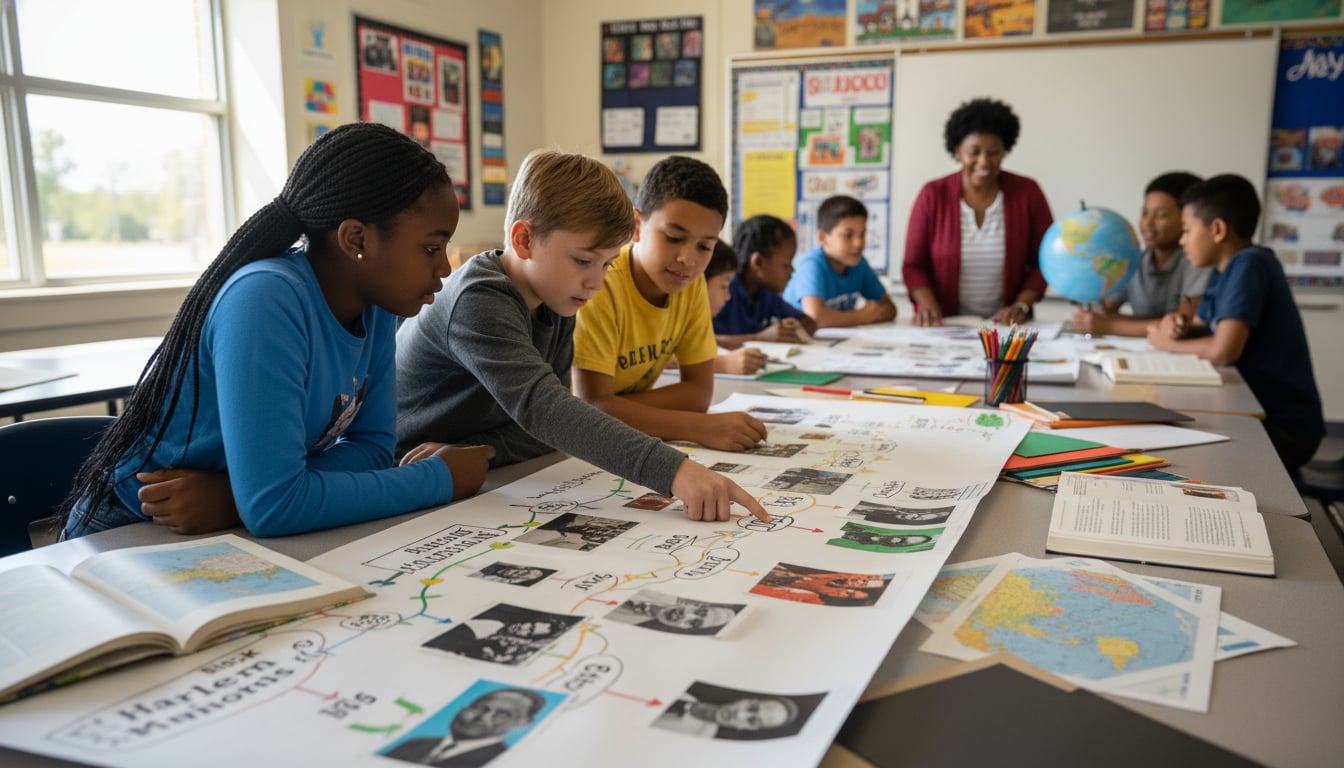
Creating an impactful Black History Month lesson plan goes beyond celebrating a few famous figures. The goal is to foster a deep, nuanced understanding of the Black experience, acknowledging triumphs, struggles, and the immense contributions of African Americans to the United States and the world. For busy educators, planning these critical lessons can feel overwhelming. Finding the time to develop materials that are engaging, accurate, and age appropriate is the real challenge. This guide provides a framework to help you build a meaningful Black History Month lesson plan that resonates with students and integrates seamlessly into your curriculum.
Whether you need a quick starting point or a full unit, TeachTools’ Lesson Plan Generator can help you outline objectives, activities, and assessments aligned to your specific grade and subject in minutes.
Guiding Principles for an Inclusive Black History Month Lesson Plan
A thoughtful approach is crucial for teaching Black history respectfully and effectively. It means celebrating culture, confronting difficult truths, and inspiring students to see the world through a more inclusive lens. Keep these core principles in mind as you develop your Black History Month lesson plan.
Center Black Voices and Perspectives
Always prioritize primary sources and narratives from Black individuals. This includes diaries, letters, speeches, autobiographies, and art. Let the people who lived the history tell their own stories.
Go Beyond Slavery and the Civil Rights Movement
While essential topics, limiting Black history to these two periods is a disservice. A study by the National Museum of African American History and Culture found that U.S. history classes often spend only 8 to 9 percent of time on Black history. Broaden your scope to include Black excellence in science, the arts, entrepreneurship, and politics throughout history.
Connect History to the Present
Help students understand how historical events continue to shape contemporary society. Discuss the legacy of policies, the evolution of social movements, and the ongoing pursuit of equality. A well crafted Black History Month lesson plan should build bridges between yesterday and today.
Reflect the Diversity of the Black Experience
The Black community is diverse, with a wide range of cultures, opinions, and experiences. Highlight many different individuals and communities, avoiding the trap of presenting a few “safe” heroes as representatives for all.
Planning Your Black History Month Lessons: Key Essentials
Effective planning is the foundation of any great unit. Before diving into specific activities, consider the scope, grade level appropriateness, and resources you need.
- Define Your Scope: Will you focus on a specific theme, historical period, or a set of key figures? The Association for the Study of African American Life and History (ASALH), founded by Carter G. Woodson, chooses an annual theme that can provide a great starting point.
- Adapt for Grade Levels: A Black History Month lesson plan for elementary school will look very different from one for high school. Younger students may focus on biographies and cultural celebrations, while older students can engage with complex topics like systemic racism and intersectionality.
- Gather Your Resources: Collect a mix of books, articles, videos, and primary source documents. When time is short, tools like the TeachTools Worksheet Generator can help you quickly create supporting materials that are structured and standards aligned.
Black History Month Lesson Plan by Grade Band
One of the biggest questions educators face is how to pitch content appropriately. A kindergartener and an eighth grader both deserve rich exposure to Black history, but the delivery has to match their developmental stage. Practitioners on Reddit frequently emphasize that the biggest mistake teachers make is using the same materials across wildly different age groups. Here are grade band specific frameworks to solve that problem.
Grades K through 5: Building Foundations Through Story and Celebration
Elementary students learn best through storytelling, sensory activities, and concrete examples. The focus at this level should be on inspiring figures, cultural contributions, and community values.
Recommended approaches:
- Read alouds and picture books: Use titles like Amazing Grace by Mary Hoffman, The Undefeated by Kwame Alexander, or Hidden Figures (young readers’ edition) by Margot Lee Shetterly. Follow each book with a simple graphic organizer where students draw and write what the person accomplished and why it matters.
- Cultural arts exploration: Introduce students to the art of Jacob Lawrence (discussed in more detail below), the music of Louis Armstrong, or the poetry of Langston Hughes through short, guided listening and viewing sessions.
- “Person of the Day” routine: Each morning during February, introduce a different Black American with a short biography, a photo, and one discussion question. Students add the figure to a class timeline or bulletin board.
- Hands on activities: Younger students can create stamps honoring a Black leader (see the persuasive essay stamp design activity in the lesson ideas below) or build simple dioramas of important historical moments.
For teachers looking to save time on elementary prep, time saving tools for elementary teachers covers practical strategies that pair well with these lessons.
Key principle for K through 5: Keep it hopeful without being dishonest. Young children can understand that people faced unfair treatment and worked hard to change things. They don’t need graphic details of violence, but they do need honesty about injustice.
Grades 6 through 8: Deepening Critical Thinking and Historical Analysis
Middle schoolers are ready for more complexity. They can handle primary source analysis, understand cause and effect across time periods, and begin grappling with systemic issues.
Recommended approaches:
- Primary source stations: Set up classroom stations with excerpts from Frederick Douglass’s autobiography, Ida B. Wells’s journalism, letters from Freedom Riders, and photographs from the March on Washington. Students rotate through, using a sourcing protocol (who wrote it, when, why, for whom) to analyze each document.
- Debate and discussion: Introduce structured Socratic seminars on topics like the effectiveness of nonviolent protest versus direct action, or the legacy of Reconstruction. Use evidence from primary sources as the basis for student arguments.
- Research projects on “hidden figures”: Assign students lesser known Black Americans to research, such as Bessie Coleman (first Black woman to earn a pilot’s license), Robert Smalls (enslaved man who commandeered a Confederate ship), or Shirley Chisholm (first Black woman elected to Congress).
- Cross curricular connections: In science class, study the contributions of Black scientists (see Lesson Idea #14 below). In ELA, analyze the rhetoric of civil rights speeches. In math, examine demographic data and historical patterns.
For strategies on reaching students at different levels within a single middle school class, differentiation for teachers offers concrete frameworks.
Key principle for grades 6 through 8: This is the age where students start forming their own views on justice and fairness. Give them evidence, let them argue, and resist the urge to oversimplify.
How to Integrate Black History into Your ELA Curriculum
English Language Arts provides a natural home for exploring Black history. The stories, speeches, and poems of Black writers are powerful tools for building empathy and critical thinking skills.
Using Literature as a Window
Select novels, short stories, and picture books by Black authors. For younger grades, this could be Amazing Grace by Mary Hoffman. For middle and high school, works by authors like James Baldwin, Zora Neale Hurston, or Angie Thomas can spark profound conversations.
Analyzing Rhetoric and Primary Sources
Analyze the powerful rhetoric in Dr. Martin Luther King Jr.'s “I Have a Dream” speech or the incisive arguments in Ida B. Wells’s anti lynching journalism. Examining these primary sources helps students understand historical context and the power of language.
Exploring Poetry and Spoken Word
The poetry of Langston Hughes, Maya Angelou, and Amanda Gorman offers a rich field for literary analysis. Explore themes of identity, resistance, and hope. A great Black History Month lesson plan activity involves having students write their own poetry inspired by these works. To scaffold drafting for upper elementary, try these creative writing prompts for grade 5.
Top 14 Black History Month Lesson Plan Ideas
This collection of lesson plans offers practical, creative ways to integrate African American history into your daily curriculum. The activities span various learning styles, from research projects to interactive museum displays, ensuring every student finds a meaningful connection to the legacy of Black excellence.
1. Use Black History Lesson Plans
Inquiry driven lesson plans invite students to grapple with complex lived experiences and contributions of Black Americans. By centering Black agency and working directly with primary sources, learners move beyond trivia toward evidence based understanding of how Black history is foundational to U.S. history.
Make it happen:
- Analyze primary sources with sourcing tools to surface author, audience, and purpose.
- Investigate thematic units in collaborative research pods, assigning roles for evidence gathering.
- Map historical claims and counterclaims on a shared digital board using cited evidence.
- Craft bio poems that connect a figure’s choices to broader historical contexts.
Student product: A Living History Portfolio with primary source analyses, reflective mini essays, and a digital StoryMap.
Resources and at a glance:
- Essential resources: NMAAHC Learning Lab, U.S. National Archives: African American Research, Facing History and Ourselves
- At a glance: Grades K through 12, Time 3 to 5 periods, Prep Medium, Cost Free, Cross curricular ELA/SS, Standards CCSS
2. Complete Theme Lessons Based Around Black History
Thematic units (Innovation, Civic Leadership, Culture) help students see patterns across eras rather than isolated facts. Learners synthesize achievements and obstacles, build empathy, and make cross curricular connections as they research, compare, and present findings rooted in primary evidence.
Make it happen:
- Choose a unifying theme (e.g., STEM, arts, civic action) and set essential questions.
- Research figures and movements using trusted digital archives and note catchers.
- Compare goals, strategies, and impacts with organizers that highlight cause and effect.
- Design a poster or slide that curates quotes, artifacts, and a concise thesis.
Student product: A gallery walk or digital portfolio of themed biographies, quotes, and influence maps.
Resources and at a glance:
- Essential resources: NMAAHC Learning Lab, PBS African American Heritage Collection
- At a glance: Grades K through 8, Time 3 to 5 days, Prep Medium, Cost Free, Cross curricular ELA/Social Studies, Standards CCSS
3. Do a Black History Timeline Project
Mapping milestones from early civilizations to modern movements helps students see Black history as an evolving narrative of resilience. By sequencing and annotating turning points, learners connect past activism to present day progress and recognize throughlines across centuries.
Make it happen:
- Research assigned eras and identify pivotal events using reputable archives.
- Write concise summaries that explain long term significance and ripple effects.
- Pair events with primary source imagery, captions, and citations.
- Draw connective lines between non sequential events to highlight themes (e.g., voting rights).
Differentiate/Extend: Offer biographical timelines focused on one individual’s life across contexts.
Student product: A classroom spanning, annotated visual timeline that functions as a historical argument.
Resources and at a glance:
- Essential resources: NMAAHC Museum Collections, The 1619 Project, BlackPast
- At a glance: Grades 4 through 12, Time 3 to 5 days, Prep Medium, Cost Free, Cross curricular ELA/History, Standards CCSS/NCSS
4. Study Black History Inventors, Figures, Leaders, and Heroes
A focused study of trailblazers (scientists, artists, organizers, and leaders) shows how ingenuity and courage shape communities. Students practice research, interpretation, and presentation while drawing inspiration from lives of resilience and innovation.
Make it happen:
- Choose a figure, generate questions with a KWL, and set a research plan.
- Gather sources that reveal “Big Ideas,” barriers faced, and lasting impact.
- Build a “Biography in a Bag” of symbolic artifacts connected to evidence.
- Deliver a 60 second elevator pitch during a gallery walk.
Student product: A symbolic biography display and short presentation.
Resources and at a glance:
- Essential resources: NMAAHC Exhibitions, National Archives Biographies, PBS: The ABCs of Black History
- At a glance: Grades K through 8, Time 3 to 5 days, Prep Medium, Cost Free, Cross curricular STEM/ELA/SS, Standards CCSS
5. Black History Month Research Activities
Research that reaches beyond the textbook grows historical literacy and empathy. Students investigate “unsung heroes,” corroborate facts with primary sources, and connect past contributions to present day art, science, politics, and justice.
Make it happen:
- Select a lesser known figure and draft three guiding inquiry questions.
- Examine letters, photos, or articles in digital archives to verify claims.
- Map findings to contemporary movements or technologies.
- Scaffold with curated sources and sentence starters for emerging researchers.
Student product: A “Living History Museum” display anchored by a primary artifact and explanatory text.
Resources and at a glance:
- Essential resources: NMAAHC Collections, U.S. National Archives
- At a glance: Grades 4 through 12, Time 3 to 5 periods, Prep Low, Cost Free, Cross curricular ELA/History, Standards CCSS
6. Black History Month Biographies Activity
From STEM to literature, biographies illuminate how individual agency and context intersect. Students synthesize timelines, analyze sources, and transform research into accessible, celebratory showcases of Black excellence.
Make it happen:
- Pick a figure and craft impact focused research questions.
- Build a factual timeline from primary and secondary sources.
- Organize findings into a storyboard that highlights breakthroughs.
- Produce a creative final piece for peer teaching.
Differentiate/Extend: Compare two figures from different eras to surface continuity and change.
Student product: Biography Trading Card or multimedia presentation for a class museum.
Resources and at a glance:
- Essential resources: NMAAHC Collections, Biography.com, Library of Congress Primary Sources, PBS LearningMedia
- At a glance: Grades 3 through 12, Time 2 to 4 class periods, Prep Low, Cost Free, Cross curricular ELA/Social Studies, Standards CCSS
7. Use a No Prep Black History Month Resource
No prep interactive notebooks and biography packs create instant entry points. With curated sources and structured reflection, students explore civil rights milestones, agency, and legacy without heavy setup while building habits of evidence based thinking.
Make it happen:
- Assign ready made biography packets or slide decks (STEM, grassroots activism, arts).
- Let students progress independently through self contained modules.
- Analyze embedded primary sources to identify turning points and impacts.
- Offer focus tracks (e.g., Harlem Renaissance, Reconstruction).
Student product: A Digital Profile Portfolio capturing key life events, legacies, and reflections. As a quick warm up or review, launch a Black History vocabulary bingo using key terms from your unit.
Resources and at a glance:
- Essential resources: NMAAHC Collections, Library of Congress Primary Source Set, PBS LearningMedia Black History Month
- At a glance: Grades 3 through 12, Time 60 minutes, Prep Low, Cost Free, Cross curricular ELA/Civics, Standards CCSS/NCSS
8. Complete a Black History Month Research Project
A deep dive research project pushes students past surface narratives into analysis of media portrayals, primary documents, and historical impact. Learners practice sourcing, synthesis, and presentation while honoring the breadth of Black contributions.
Make it happen:
- Select a figure or movement from a curated starter list.
- Examine primary sources (letters, clippings, photographs) to develop claims.
- Draft an impact report that balances achievements with context and challenges.
- Build a visual display or interactive map that layers evidence with narrative.
Differentiate/Extend: Compare mainstream and Black press coverage to analyze framing and bias.
Student product: A multi modal Legacy Exhibit presentation.
Resources and at a glance:
- Essential resources: NMAAHC: North Star, Library of Congress Primary Source Sets, BlackPast
- At a glance: Grades 3 through 12, Time approximately 2 weeks, Prep Medium, Cost Free, Cross curricular History/ELA, Standards NCSS
9. Transform Your Classroom into a Black History Museum
When students become curators, they claim narrative power. Designing themed “wings,” writing placards, and guiding tours deepens historical understanding and public speaking while celebrating Black history within your school community.
Make it happen:
- Choose themes (Civil Rights, STEM, Culture) and draft curatorial questions.
- Analyze primary sources and craft precise, engaging exhibit labels.
- Build exhibits with visual centerpieces and QR linked student audio.
- Host a grand opening tour; assign students as docents.
Differentiate/Extend: Create a parallel virtual gallery in Minecraft or a slide based museum.
Student product: A curated museum installation with displays, placards, and recorded oral presentations.
Resources and at a glance:
- Essential resources: Smithsonian Searchable Museum, Library of Congress: African American History Resources
- At a glance: Grades 4 through 12, Time approximately 3 project weeks, Prep Medium, Cost Free, Cross curricular Social Studies/Arts, Standards NCSS
10. Test Students’ Knowledge with a Black History Month Quiz
A quick, multi modal quiz doubles as retrieval practice and diagnostic. Students analyze short sources, recall key figures and movements, and reflect on misconceptions, setting up targeted mini lessons that deepen understanding.
Make it happen:
- Prime background knowledge with a rapid review (e.g., Reconstruction flash recap).
- Take a mixed format quiz (stimulus based items, IDs, short evidence cites).
- Debrief in groups, citing sources to resolve tricky items.
- Create “Correction Connection” slides on missed topics.
Student product: A self assessment sheet with scores, evidence notes, and student generated trivia.
You can build a custom quiz in minutes with the TeachTools Quiz Generator, aligned to your grade and topic.
Resources and at a glance:
- At a glance: Grades 4 through 12, Time 45 minutes, Prep Low, Cost Free, Cross curricular ELA/SS, Standards CCSS
11. Watch Black History Month Movies and Documentaries
Age appropriate film clips bridge the gap between dates and lived experience. By pausing to observe, verify against archives, and discuss, students build empathy and media literacy while testing cinematic narratives against historical evidence.
Make it happen:
- Select vetted film segments and provide short context briefs.
- Use “Pause and Process” to capture sensory details and claims.
- Cross reference scenes with primary sources to check accuracy.
- Facilitate a Socratic seminar using cited evidence.
Student product: A “Fact vs. Film” infographic that contrasts scenes with documented sources.
Resources and at a glance:
- Essential resources: Common Sense Media, PBS LearningMedia, NMAAHC Digital Collection
- At a glance: Grades K through 12, Time 2 to 4 periods, Prep Moderate, Cost Low, Cross curricular ELA/History, Standards CCSS/NCSS
12. Create an Encyclopedia of Black Leaders
Students become historians by building a collaboratively authored “Encyclopedia of Black Excellence.” Researching overlooked scientists, artists, and activists grows information literacy and honors legacies through rigorous, reader friendly entries.
Make it happen:
- Choose a “hidden figure” from STEM, arts, military, or civic life.
- Extract data from primary sources (via the Library of Congress) and reliable secondary texts.
- Draft entries with narrative biography, key works, and legacy analysis.
- Design pages with images and citations; compile the class volume.
Student product: A bound class book or interactive database of vetted encyclopedia entries.
Resources and at a glance:
- Essential resources: BlackPast, National Archives
- At a glance: Grades 5 through 12, Time 2 to 3 weeks, Prep Moderate, Cost Free, Cross curricular ELA/History, Standards CCSS
13. Exploring African American Inventors and Innovations
Studying patents and problem solving spotlights Black innovators, famous and unsung, whose breakthroughs advanced everyday life. Students read technical diagrams, connect inventions to context, and pitch upgrades that link past ingenuity to present day STEM.
Make it happen:
- Select innovators from trusted archives (e.g., USPTO, museum collections).
- Decode patent diagrams to explain how the invention works and why it mattered.
- Record a 60 second pitch proposing a modern iteration or application.
- Match common household items to their Black inventors to build relevance.
Student product: A digital Inventor’s Portfolio with biography, technical analysis, and a persuasive video pitch.
Resources and at a glance:
- Essential resources: NMAAHC Learning Lab, USPTO: Black Inventors
- At a glance: Grades 4 through 12, Time 2 to 3 periods, Prep Low, Cost Free, Cross curricular STEM/ELA, Standards NGSS/CCSS
14. Explore Famous Black Scientists in History
Highlighting “hidden figures” in STEM helps students connect scientific method, perseverance, and social context. By tracing breakthroughs and mapping their modern impacts, learners see how Black scientists continue to shape our world.
Make it happen:
- Select a scientist (e.g., Dr. Kizzmekia Corbett) from curated galleries.
- Research discoveries and systemic barriers using primary sources.
- Create an impact map linking the work to current technologies and health applications.
- Present findings in a digital gallery walk for peer feedback.
- Scaffold with graphic organizers and sentence frames for emerging writers.
Student product: An infographic or foldable “Innovation Cuboid” explaining the science and its societal reach.
Resources and at a glance:
- Essential resources: NASA Modern Figures Toolkit, NMAAHC Collections, Biography.com: Black Scientists
- At a glance: Grades 6 through 12, Time 3 to 5 class periods, Prep Medium, Cost Free, Cross curricular Science/ELA, Standards NGSS/CCSS
Focused Lesson Plans for Key Historical Topics
Explore 26 free AI tools for teachers
Browse All Tools →Beyond the 14 activity ideas above, certain topics deserve their own dedicated lesson frameworks. These are the moments and movements that students consistently ask about, and they provide natural anchor points for a Black History Month lesson plan at any grade level.
Civil Rights Movement Lesson Plan
The civil rights movement is the backbone of most Black History Month units, and for good reason. But treating it as a single chapter rather than a decades long, multi layered struggle sells it short.
Framework for a strong unit:
- Start with the long roots of the movement: Reconstruction, Jim Crow laws, the Great Migration, and the role of Black churches and HBCUs in organizing.
- Study key organizations (NAACP, SNCC, SCLC, CORE) and their different philosophies. Students often assume the movement was monolithic; showing internal debates builds critical thinking.
- Use primary sources: photographs from the Birmingham campaign, audio recordings of Freedom Songs, arrest records from sit ins.
- End with the question “Did the movement succeed?” and let students argue both sides with evidence.
For creating assessments that check understanding without eating up your planning time, ways to make test creation less time consuming is worth a read.
March on Washington Lesson Plan
The March on Washington for Jobs and Freedom on August 28, 1963, drew over 250,000 people to the National Mall. Most students know it only as the backdrop for Dr. King’s “I Have a Dream” speech, but the march itself was a masterclass in coalition building and logistics.
Key lesson components:
- Study the demands of the march (not just civil rights but economic justice: a higher minimum wage, full employment, decent housing).
- Examine the roles of A. Philip Randolph, Bayard Rustin (the chief organizer), and John Lewis (who was 23 years old and gave a fiery speech that had to be toned down at the last minute).
- Have students compare the 1963 demands to current conditions. Which demands have been met? Which haven’t?
“I Have a Dream” Lesson Plan
This speech is one of the most analyzed texts in American education, and it deserves that attention. But go beyond the famous refrain.
Teaching the speech effectively:
- Provide the full text, not just the “dream” section. The first half of the speech is a powerful indictment of broken promises, referencing the Emancipation Proclamation as a “promissory note” that America defaulted on.
- Analyze rhetorical devices: anaphora, metaphor, allusion to the Constitution and Declaration of Independence.
- Have students listen to the audio. Dr. King departed from his prepared text midway through, and Mahalia Jackson reportedly called out “Tell them about the dream, Martin!” Understanding this moment humanizes the speech.
- Compare it to other speeches from the same era, like Malcolm X’s “The Ballot or the Bullet,” to show the range of Black political thought.
Harlem Renaissance Lesson Plan
The Harlem Renaissance (roughly 1918 to 1937) was an explosion of Black art, literature, music, and intellectual thought centered in New York City’s Harlem neighborhood. It produced some of the most important American art of the twentieth century.
Building a unit around the Harlem Renaissance:
- Literature: Read poems by Langston Hughes (“Harlem,” “The Negro Speaks of Rivers”), Countee Cullen, and Claude McKay. For prose, excerpts from Zora Neale Hurston’s Their Eyes Were Watching God work well for older students.
- Visual art: Study the work of Aaron Douglas, whose bold, geometric style defined the visual identity of the era. Jacob Lawrence’s Migration Series (covered in its own section below) fits naturally here.
- Music: Play recordings of Duke Ellington, Bessie Smith, and Louis Armstrong. Discuss how jazz and blues emerged from Black cultural traditions and reshaped American music permanently.
- Context: Don’t skip the conditions that created the Renaissance. The Great Migration brought millions of Black Americans from the rural South to northern cities, creating concentrated communities of artists, writers, and thinkers for the first time.
Racial Equality Discussion Lesson Plan
This is the lesson many teachers find hardest to teach, and the one students often need most. A structured discussion about racial equality requires clear ground rules, good source material, and a facilitator who is comfortable with discomfort.
Structure for a productive discussion:
- Set norms collaboratively: listen to understand, use evidence, separate the idea from the person.
- Provide a shared text or data set as the discussion anchor. Examples: redlining maps from your city, school discipline data disaggregated by race, or excerpts from Between the World and Me by Ta Nehisi Coates.
- Use a Socratic seminar or fishbowl format so every student participates.
- Close with a written reflection, not a debate “winner.” The goal is understanding, not persuasion.
Practitioners on Reddit report that giving students a structured protocol (like the “Save the Last Word” strategy) dramatically improves the quality of these conversations compared to open ended discussion.
Juneteenth Lesson Plan
Juneteenth (June 19) commemorates the day in 1865 when enslaved people in Galveston, Texas, finally learned of their freedom, more than two years after the Emancipation Proclamation. It became a federal holiday in 2021.
Teaching Juneteenth effectively:
- Explain the timeline gap. Why did it take so long for the news to reach Texas? This raises questions about enforcement, geography, and the willingness of enslavers to maintain the status quo.
- Study how Juneteenth has been celebrated historically: community gatherings, readings of the Emancipation Proclamation, red foods (strawberry soda, red velvet cake) that symbolize resilience.
- Connect to the present: What does freedom mean today? How do communities still celebrate and what has changed since it became a federal holiday?
- For younger students, picture books like Juneteenth for Mazie by Floyd Cooper make the topic accessible and age appropriate.
Jacob Lawrence Migration Series Lesson Plan
Jacob Lawrence’s Migration Series (1940 to 1941) is a set of 60 tempera paintings that tell the story of the Great Migration, when approximately six million Black Americans moved from the rural South to cities in the North, Midwest, and West between 1910 and 1970.
Why this works as a standalone lesson:
- Lawrence was only 23 when he completed the series, making him relatable to student artists.
- Each painting is paired with a caption Lawrence wrote himself, making it a built in primary source.
- The series covers push factors (racial violence, sharecropping, lack of opportunity) and pull factors (industrial jobs, relative freedom, community) in visual form, which is ideal for visual learners and ELL students.
Activity: Assign each student one panel. They research the historical event or condition it depicts, write a paragraph connecting it to the broader migration story, and present to the class so the full narrative unfolds panel by panel.
Selma Lesson Plan
The Selma to Montgomery marches of 1965 were a turning point in the voting rights struggle. “Bloody Sunday” (March 7, 1965), when Alabama state troopers attacked peaceful marchers on the Edmund Pettus Bridge, was broadcast on national television and shocked the country.
Lesson components:
- Study the context: voter suppression tactics in Alabama (literacy tests, poll taxes, intimidation).
- Read excerpts from John Lewis’s memoir Walking with the Wind about that day on the bridge.
- Analyze the Voting Rights Act of 1965, which passed five months after Bloody Sunday. What did it do? What has happened to it since (specifically the 2013 Shelby County v. Holder Supreme Court decision)?
- Have students compare voter access issues then and now.
Nelson Mandela Lesson Plan
While Black History Month focuses primarily on the American experience, Nelson Mandela’s story connects the global struggle against racial oppression. His 27 years of imprisonment and subsequent presidency of South Africa provide a powerful case study in resistance, reconciliation, and leadership.
Teaching Mandela in a U.S. classroom:
- Compare apartheid in South Africa to Jim Crow in the United States. Students can use a Venn diagram to identify similarities and differences.
- Read Mandela’s 1964 speech from the dock at the Rivonia Trial, where he said he was “prepared to die” for the ideal of a democratic and free society.
- Discuss the role of international solidarity: How did the American anti apartheid movement connect to the broader civil rights tradition?
Muhammad Ali Lesson Plan
Muhammad Ali is often remembered only as a boxer, but his story intersects with the Nation of Islam, the Vietnam War, racial pride, and free speech. He is one of the most complex and compelling figures of the twentieth century.
Key teaching angles:
- Ali’s refusal to be drafted in 1967 and his famous statement: “I ain’t got no quarrel with them Viet Cong.” Discuss the personal cost (stripped of his title, banned from boxing for three years) and the legal case that went to the Supreme Court.
- His decision to change his name from Cassius Clay and what that represented about identity and self determination.
- Compare Ali’s activism to that of modern athletes who use their platforms for social commentary.
Black History Month Activities That Bring Learning to Life
Beyond structured lesson plans, these activities add texture and energy to your Black History Month unit. Many of them work as warm ups, stations, or culminating projects.
Persuasive Essay Stamp Design Activity
This activity combines art, writing, and civic engagement. Students research a Black American they believe deserves to be honored on a U.S. postage stamp, then design the stamp and write a persuasive essay arguing for their choice.
How it works:
- Students select a figure (encourage lesser known individuals).
- Research the figure’s contributions and legacy.
- Design the stamp, including imagery, text, and denomination.
- Write a persuasive essay (or letter to the Postmaster General) making the case.
This pairs well with reading comprehension activities if you want students to read about their chosen figure before writing.
Science Experiment on a Black Scientist
Pick a Black scientist and replicate (in simplified form) one of their experiments or discoveries. For example:
- George Washington Carver: Conduct soil experiments comparing nutrient levels in different conditions, connecting to his work on crop rotation and peanut based products.
- Mae Jemison: Explore space science with a gravity simulation experiment or research into how the body adapts to microgravity.
- Dr. Charles Drew: Study blood types and discuss how Drew’s work on blood banks saved countless lives.
The key is connecting the hands on experiment back to the scientist’s story and the barriers they faced.
Civil Rights Crossword and Word Search Activities
Vocabulary activities like crosswords and word searches might seem simple, but they serve an important purpose: they ensure students know the key terms before diving into complex source material. Terms like “desegregation,” “boycott,” “amendment,” “suffrage,” and “Reconstruction” appear constantly in Black history texts.
You can generate custom puzzles with the TeachTools Bingo generator for vocabulary review, or create crossword and word search activities that match your specific unit vocabulary.
Black History Classroom Reading List
A strong classroom library during February (and beyond) should include:
Elementary (K through 5):
- The Undefeated by Kwame Alexander
- Each Kindness by Jacqueline Woodson
- Hidden Figures (young readers’ edition) by Margot Lee Shetterly
- Martin’s Big Words by Doreen Rappaport
- Separate Is Never Equal by Duncan Tonatiuh
Middle School (6 through 8):
- Brown Girl Dreaming by Jacqueline Woodson
- March (graphic novel trilogy) by John Lewis
- One Crazy Summer by Rita Williams Garcia
- Ghost Boys by Jewell Parker Rhodes
- Stamped (remix) by Jason Reynolds and Ibram X. Kendi
High School (9 through 12):
- The Hate U Give by Angie Thomas
- Between the World and Me by Ta Nehisi Coates
- Their Eyes Were Watching God by Zora Neale Hurston
- Beloved by Toni Morrison
- The Autobiography of Malcolm X by Malcolm X and Alex Haley
Bulletin Board or Door Decoration Idea
Transform your classroom door or a bulletin board into an interactive learning space. Some approaches that work:
- “Wall of Excellence” timeline: Students add a new figure each day with a photo, short bio, and one key quote. By the end of the month, the wall tells a visual story.
- Quote gallery: Print powerful quotes from Black leaders, poets, and thinkers. Students choose one, research the speaker, and write a brief response explaining why the quote resonates. Post both the quote and the response.
- Interactive map: Pin a U.S. (or world) map to the board and have students mark locations significant to Black history, with index cards explaining each site’s importance.
Quote Gallery Activity
A quote gallery walk is a low prep, high impact activity. Print 10 to 15 quotes from Black Americans across different eras and fields. Tape them around the room. Students walk the room with a response sheet, selecting three quotes that stand out and writing a brief analysis of each: Who said it? When? What does it mean in context?
This works as a bell ringer activity spread across multiple days, or as a single class period activity.
Black History Printables
Printable resources (coloring pages for younger students, graphic organizers, timeline templates, vocabulary sheets) make differentiation easier and give students a tangible product. When combined with primary source analysis, even a simple “fact sheet” printable becomes a research tool rather than busywork.
Beyond February: Making Black History a Year Round Focus
One of the most important goals is to teach students that Black history is American history, not a separate topic to be addressed for only 28 days. Carter G. Woodson, who first proposed “Negro History Week” in 1926, envisioned it as a time to highlight contributions that should be studied all year. Here are a few strategies to ensure the learning continues.
- Weave it in: When teaching a unit on scientific innovation, include Dr. Charles Drew. When discussing the space race, highlight Katherine Johnson. Make these connections a natural part of your existing curriculum.
- Diverse classroom library: Ensure your classroom library features books with Black protagonists by Black authors all year long, not just in February.
- Current events: Connect current events to their historical roots, discussing how the past informs the present on an ongoing basis. Juneteenth in June, for example, is a perfect opportunity to revisit themes from your February unit.
Making this a consistent practice reinforces the idea that Black history is integral to every subject and every month of the school year. For more on reducing the planning burden that comes with year round integration, see these strategies for reducing teacher workload.
Conclusion
A successful Black History Month lesson plan moves students from passive observation to active engagement. By centering Black voices, connecting the past to the present, and committing to year round integration, you can create a learning experience that is not only educational but genuinely transformative. It’s about building a more complete and accurate picture of our shared history.
Ready to save hours on prep and create classroom ready materials? Explore all TeachTools and build your next lesson plan in minutes.
Frequently Asked Questions About Black History Month Lesson Plans
How can I make my Black History Month lesson plan engaging for elementary students?
Focus on storytelling, biographies of inspiring figures, and hands on activities. Read picture books by Black authors, explore music and art from different eras, and consider a project where students research and present on a notable inventor, artist, or athlete. The K through 5 guide above has specific book recommendations and activity ideas.
What is a common mistake to avoid when creating a Black History Month lesson plan?
A common mistake is tokenism, or focusing only on a few well known figures like Martin Luther King Jr. and Rosa Parks. A more effective Black History Month lesson plan celebrates a wide array of individuals and explores the diversity of the Black experience, including scientists, artists, writers, and entrepreneurs.
How can AI tools help with my Black History Month lesson plan?
AI tools designed for educators can be a massive time saver. The TeachTools Lesson Plan Generator can help you structure your unit with clear objectives, materials, and procedures. You can also use AI to generate discussion questions, vocabulary lists, or quizzes to assess student understanding.
Where can I find reliable primary sources for my lessons?
Excellent sources for primary documents include the National Archives, the Library of Congress, and the National Museum of African American History and Culture. These institutions have vast digital collections of letters, photographs, and historical documents.
Why is it important to teach Black history beyond February?
Teaching Black history throughout the year reinforces that it is an integral part of American and world history, not a separate, isolated topic. Continuous integration helps students build a more complete and accurate understanding of the past and its impact on the present.
What grade levels are these lesson plans designed for?
The lesson ideas in this guide span grades K through 12. The grade band section breaks down specific approaches for K through 5 and 6 through 8, while many of the 14 lesson plan ideas include grade range recommendations so you can adapt them to your classroom.
How do I teach the civil rights movement without oversimplifying it?
Show the movement’s internal debates, its long roots in earlier resistance, and its unfinished business. Use primary sources from multiple perspectives within the movement (not just Dr. King) and ask students to evaluate both successes and limitations. The dedicated civil rights movement section above provides a full framework.