AI in Education: 2026 K-12 Guide & Compliance Checklist
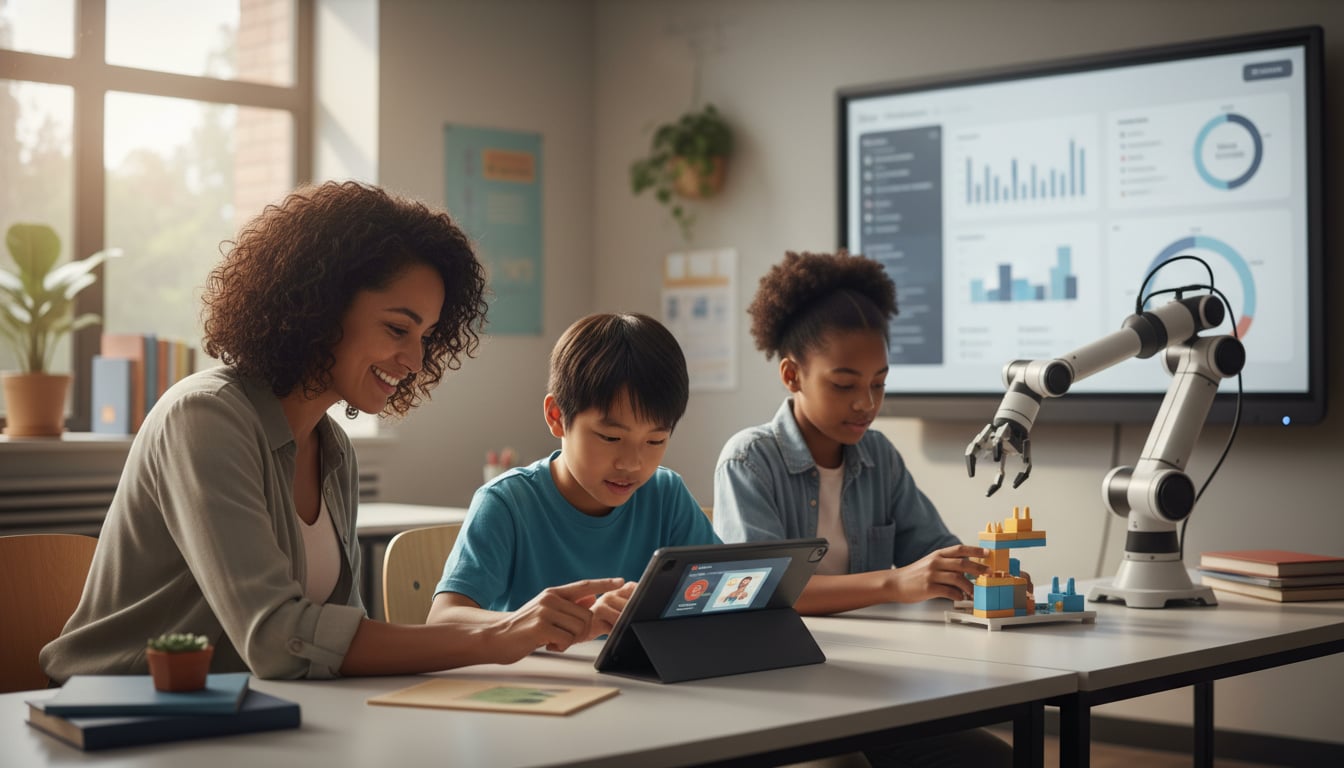
Artificial intelligence is no longer a futuristic concept; it’s a present day reality that’s rapidly transforming classrooms. At its core, ai in education refers to using artificial intelligence technologies to enhance teaching and learning, from intelligent tutoring systems to automated grading tools. As these AI tools become more common, educators, parents, and administrators are navigating a new landscape filled with powerful opportunities and important questions. This guide breaks down everything you need to know about ai in education, from what it is and why it matters to how it can be used safely and effectively to support teaching and learning.
What is AI in Education?
Broadly, ai in education encompasses any use of AI technology to support the educational process. This includes everything from intelligent tutoring systems and personalized learning platforms to automated grading tools and data analytics programs. According to UNESCO, the main goal is to improve learning outcomes and boost student engagement by adapting instruction to individual needs and automating routine tasks for teachers.
Think of it this way: AI can analyze dozens of factors, like quiz results and even click patterns, to instantly spot a student’s knowledge gaps. This allows a teacher to intervene and provide targeted support much faster than before. While this technology brings incredible potential, its rapid growth also introduces risks like bias and privacy issues, making it crucial for schools to develop thoughtful policies.
Why is AI in Education So Important?
Many experts believe education is one of the fields that will benefit most from artificial intelligence. The technology has the potential to solve some of the biggest challenges in schools today, from learning gaps to teacher shortages.
Preparing Students for the Future
School leaders recognize that AI will be a cornerstone of the future job market. Preparing students to understand and work with AI is now a fundamental part of digital literacy. As colleges rapidly add AI related majors and courses, K-12 schools feel an urgency to embrace ai in education to keep students competitive for higher education and their future careers.
Transforming Teaching and Learning
Properly implemented, AI can dramatically improve educational quality. For instance, early studies have shown that AI tutoring systems can lead to incredible learning gains. One experiment found students learned over twice as much material with an AI tutor compared to traditional classroom lessons.
Teacher adoption is already widespread. A 2024 poll revealed that 60% of U.S. K-12 teachers were using AI tools. These educators report that the tech makes them more effective by freeing up their time and offering new insights into student learning.
The Unique Powers of AI in EdTech
AI brings several unique capabilities to educational technology that set it apart from traditional software.
- Personalization at Scale: AI can analyze each student’s performance in real time and adjust content accordingly. This means millions of students can receive instruction tailored to their individual needs simultaneously.
- Immediate Feedback: Instead of waiting days for a teacher to grade work, AI systems provide instant feedback. This rapid loop helps students correct misunderstandings right away and accelerates learning.
- Data Driven Insights: AI excels at finding patterns in large datasets, like test scores and attendance. It can spot trends a busy teacher might miss, enabling more informed decisions and earlier interventions.
- Automation and Efficiency: A key benefit of ai in education is automating routine tasks. AI can generate practice questions, grade quizzes, and handle scheduling, freeing up educators for more important activities like direct student interaction.
- Scaling Expert Knowledge: The strategies of the best teachers can be programmed into an AI tutor and delivered consistently to thousands of students, amplifying effective teaching practices across the globe.
How Does AI Benefit Students, Teachers, and Administrators?
The impact of ai in education is felt by everyone in the school community, from the student at their desk to the district superintendent.
Benefits for Students
- Personalized Learning Paths: AI acts like a personal tutor, allowing students to get extra practice where they struggle and move ahead when they master a concept.
- Timely and Constant Support: Students receive immediate feedback on their work, helping them learn from mistakes in the moment. Shy students may also feel more comfortable asking an AI tutor for help.
- Increased Engagement: AI can create lessons themed around student interests. A Texas teacher noted how a math lesson became far more engaging for her class when an AI framed it around their favorite sport, soccer. For quick review games, try a printable Bingo card generator.
- Greater Accessibility: AI offers powerful support for students with diverse needs. It can provide speech to text dictation for students with disabilities or translate materials for English language learners, ensuring everyone can access the curriculum.
Benefits for Teachers
- Massive Time Savings: One of the biggest perks for teachers is the reduction in time spent on administrative work. A national poll found that teachers using AI save about 6 hours per week on routine tasks like planning and grading.
- Improved Instruction: Teachers use AI as a brainstorming partner to get fresh ideas for explaining concepts or creating new activities. In fact, 6 in 10 teachers who use AI say it has improved the quality of their instructional materials and student feedback.
- Easier Differentiation: AI helps teachers personalize learning for a whole classroom. By quickly analyzing student data, it can group students by need and suggest targeted resources, making differentiated instruction more manageable.
- Enhanced Communication: AI can draft professional parent emails, newsletters, and announcements in seconds. It can also translate communications into families’ home languages, bridging communication gaps. For example, an Iowa teacher used an AI tool to communicate with families who speak African dialects not covered by Google Translate.
Benefits for Administrators
- Smarter Decision Making: AI can analyze district wide data on enrollment, assessments, and budgets to identify trends and inform strategic planning. This helps leaders make evidence based decisions to improve school operations.
- Streamlined Operations: Administrators use AI to automate routine tasks like creating master schedules, optimizing bus routes, and managing facilities. By handling this work, AI frees up administrators to focus on supporting students and staff.
- Proactive Student Support: AI powered early warning systems can analyze attendance and grades to flag students at risk of falling behind. This allows administrators to deploy support resources proactively before a small problem becomes a major crisis.
Common AI Use Cases in Schools Today
So, how is ai in education being used in the real world? Here are some of the most common applications you’ll find in K-12 schools.
Lesson Planning and Content Creation
Teachers are using AI to generate high quality instructional materials in a fraction of the time. They can ask an AI to create a detailed lesson plan, write practice questions, or even design a creative worksheet. Platforms like TeachTools offer a suite of specialized generators for everything from quizzes and rubrics to crossword puzzles, helping teachers get classroom ready materials with just a few clicks.
Student Feedback and Assessment
AI helps teachers provide faster, more consistent feedback. Some tools can grade multiple choice quizzes instantly, while others can analyze student writing and offer suggestions for improvement on the spot. This speeds up the feedback cycle and helps teachers focus their energy on providing deeper, more meaningful comments.
MTSS and Student Support
Multi Tiered Systems of Supports (MTSS) are frameworks schools use to provide targeted help to students. AI is a powerful partner in this process. It can analyze data from various sources to proactively flag students who need academic or behavioral support, allowing intervention teams to act quickly and effectively.
Attendance Monitoring and Early Intervention
Attendance is a critical factor in student success. AI systems can monitor attendance patterns and alert staff when a student is approaching chronic absenteeism. By combining this data with academic performance, these early warning systems help schools intervene with supportive measures before a student falls too far behind.
Family and Staff Communication
AI is making school communication faster and more inclusive. It can draft weekly newsletters, translate important announcements for non English speaking families, and even power 24/7 chatbots on school websites to answer common parent questions.
How to Implement AI in Your School District
Explore 26 free AI tools for teachers
Browse All Tools →Bringing AI into a school system requires a thoughtful strategy to ensure its success.
- Establish a Clear Vision: Start by defining what you want to achieve. Are you aiming to save teacher time, personalize learning, or improve operational efficiency? Clear goals will guide your choices.
- Involve Your Community: Bring teachers, students, parents, and administrators into the conversation early. Survey them to understand their needs and concerns.
- Develop Policies and Guidelines: Before deployment, create clear rules for acceptable use, data privacy, and ethical considerations. Define what tools are approved and how they can be used.
- Start with Pilot Programs: Test new AI tools in a few classrooms or schools first. This allows you to gather feedback, work out any issues, and build comfort with the technology before a district wide rollout.
- Provide Robust Training: Ongoing professional development is crucial. Teachers need training not just on how to use a tool, but also on how to integrate it effectively and ethically into their teaching.
- Evaluate and Iterate: Continuously monitor the impact of AI tools. Use data and feedback to see what’s working and what isn’t, and be prepared to adjust your strategy accordingly.
Evaluating AI Tools and Building Governance
With thousands of AI apps on the market, how do you choose the right ones? It’s essential to have a process for vetting tools and governing their use. A coalition of education organizations suggests evaluating tools based on five key indicators: they should be SAFE, EVIDENCE BASED, INCLUSIVE, USABLE, and INTEROPERABLE.
A great way to manage this is by forming an evaluation committee of teachers, tech staff, and administrators. A recent survey found that only 23% of school districts have AI specific evaluation processes, highlighting a critical need for more structured vetting.
A Vetting Checklist for Generative AI Apps
When evaluating a new generative AI tool, use this checklist and see our FERPA Compliant AI Tools: 2026 K-12 Checklist & Guide.
- Data Privacy: Is it FERPA compliant? Does it have a clear privacy policy?
- Student Data Use: Does the company promise not to train its models on your students’ data?
- Accuracy: Does it produce factually correct and high quality content? Test it yourself.
- Bias and Inclusivity: Does it avoid stereotypes and work for students of all backgrounds?
- Usability: Is it easy for teachers and students to use? Are there good teacher controls?
- Educational Alignment: Does it genuinely support your curriculum and learning goals?
- Age Appropriateness: Does it have content filters and a suitable interface for your students?
- Cost and Equity: Is the pricing fair? Will all students have equitable access?
Responsible AI Use in Teaching
Using AI responsibly means putting ethics, fairness, and student well being first. Here are some core principles for teachers:
- Human Oversight is Non Negotiable: AI should always be a tool that supports, not replaces, a teacher’s professional judgment. Always review AI generated content and decisions.
- Be Transparent: Let students and parents know when and how you are using AI. This builds trust and helps everyone understand the technology.
- Address Misuse: Set clear expectations to prevent cheating. Use AI’s limitations as teachable moments about critical thinking and media literacy.
- Watch for Bias: Be alert for any biases in AI outputs and be prepared to correct them to ensure fairness for all students.
- Protect Student Privacy: Never input personally identifiable information (PII) into an unapproved AI tool.
The Legal Side of AI in Schools
When schools adopt AI, they must comply with laws designed to protect students, particularly around data privacy.
- FERPA (Family Educational Rights and Privacy Act): This federal law protects the privacy of student education records. Sharing identifiable student data with a third party AI tool without a proper data protection agreement could be a violation.
- COPPA (Children’s Online Privacy Protection Act): This law applies to online services collecting data from children under 13. Schools can consent on behalf of parents, but only for educational purposes.
- State and District Policies: Many states have their own student privacy laws. Schools should only use AI vendors that sign a Data Privacy Agreement (DPA) guaranteeing they will protect student data according to these laws.
A key rule for ai in education is to minimize the use of Student Personally Identifiable Information (PII). Many powerful AI tools, like those for creating lesson materials, don’t require any PII to function. For those that do, like personalized tutors, schools must ensure data is handled with extreme care, consent is obtained, and the tool’s provider is contractually bound to protect that information.
This is why many educators turn to privacy focused platforms. For instance, tools like TeachTools are built with these rules in mind, explicitly stating they do not train their AI on user data and offer districts the legal agreements needed for compliance.
Transparency, Explainability, and Big Decisions
For AI to be trustworthy, it must be transparent. This means users should know what data an AI is collecting and why. It also means the AI should be explainable, in other words, it should be able to show why it made a certain recommendation or gave a particular score.
This is especially critical when it comes to substantive decisions that affect a student’s future, like grades, disciplinary actions, or placement in special programs. The consensus is clear: AI should never be the sole decision maker in these high stakes situations. It can provide data and suggestions, but the final judgment must always rest with a human educator who can apply context, empathy, and ethical reasoning.
Frequently Asked Questions about AI in Education
What is the main goal of using AI in education?
The primary goal of ai in education is to personalize learning, improve student outcomes, and increase efficiency for teachers. It aims to provide students with tailored support while freeing up educators from repetitive tasks so they can focus on high impact teaching.
Can AI replace human teachers?
No. AI is designed to be a powerful assistant that augments, not replaces, human teachers. The empathy, mentorship, and complex problem solving skills of a great teacher are things AI cannot replicate. The future of ai in education is one of human machine collaboration.
Is using AI in the classroom safe for student data?
It can be, but only if schools are diligent. Safety depends on choosing tools from vendors who prioritize privacy, are FERPA compliant, and sign data protection agreements. Teachers and students should also be trained never to input sensitive personal information into unvetted public AI tools.
What are some easy ways for a teacher to start using AI?
A great starting point is using an AI content generator. Tools that help create worksheets, quizzes, and lesson plans provide an immediate time saving benefit with a very low learning curve. Platforms designed specifically for educators, like the suite of generators at TeachTools, make it easy to get started without needing to learn complex “prompt engineering.”
How is AI being used to support students with special needs?
AI offers incredible tools for special education. It can provide text to speech and speech to text capabilities, create adapted learning materials, and help teachers manage the extensive paperwork required for IEPs. These tools can make the curriculum more accessible and save special education teachers valuable time.
What are the biggest concerns about AI in education?
The primary concerns revolve around data privacy, algorithmic bias, the potential for cheating, and ensuring equitable access for all students. Addressing these challenges requires strong school policies, careful tool selection, and ongoing training for both staff and students.
Will AI make learning less creative or human?
When used thoughtfully, AI can actually foster creativity. By handling rote tasks, it frees up class time for more project based learning and collaborative activities. It can also act as a creative partner, helping students brainstorm ideas or generate unique visuals for their projects. The key is to balance AI use with activities that nurture human connection and creativity.
The journey of integrating ai in education is just beginning. By staying informed, choosing tools wisely, and keeping students at the center of every decision, educators can harness this transformative technology to create more effective, equitable, and engaging learning experiences for all.