2026 Guide: 15 Multiplication Math Activities for Classrooms
Multiplication is a foundational skill that unlocks higher level mathematics like fractions, algebra, and beyond. But helping students move past rote memorization to true conceptual understanding can be a challenge. The key is to build a strong foundation and then practice with a variety of engaging multiplication math activities that make learning feel less like a chore and more like a game. When students see multiplication as a tool for solving interesting problems, their fluency and confidence grow. This guide explores strategies for building that confidence, from establishing core concepts to designing effective classroom routines.
Build the Concept First: Foundations for Teaching Multiplication
Before a student can achieve fluency, they must understand what multiplication actually is. According to the National Council of Teachers of Mathematics (NCTM), a deep understanding of multiplication is essential for future success in algebra. Educators often use the Concrete, Representational, Abstract (CRA) sequence to build this understanding from the ground up. Rushing this process is a common pitfall that can lead to learning gaps later on.
- Concrete: This stage is all about hands on learning. Students use physical items like counting bears, blocks, or tiles to create equal groups. They physically combine three groups of four blocks to see that it equals twelve. This tactile experience is a crucial first step.
- Representational: Next, students learn to represent those concrete objects with pictures. They might draw arrays, use dots to show equal groups, or create bar models. This phase connects the physical objects to mathematical drawings, bridging the gap to abstract numbers.
- Abstract: Finally, students move to the abstract stage. Here they use numbers and symbols to write a multiplication sentence, like 4 × 3 = 12. This sentence is a concise way to represent the groups and items they worked with. The parts of the sentence, the factors (4 and 3) and the product (12), now have clear meaning based on their concrete and representational experiences.
By moving through these stages, students build a solid mental model of multiplication, making it easier to apply their knowledge to new problems and more complex multiplication math activities.
Make Fluency Stick: Why Worksheets Alone Aren't Enough
Worksheets have their place for independent practice, but relying on them exclusively can lead to boredom and math anxiety. In fact, studies have shown that timed tests can be a significant source of math anxiety for many children. True fluency is about being flexible, efficient, and accurate with calculations, not just memorizing facts. A student who understands that 8 x 5 is the same as 5 x 8 has a more flexible understanding than one who has only memorized the eight times table.
Engaging multiplication math activities help develop this deeper number sense. Game based learning, for example, has been shown to increase student motivation and improve learning outcomes. A 2019 meta analysis published in the Journal of Educational Psychology found that educational games significantly improve learning outcomes compared to traditional instruction. When practice is fun, students are more willing to put in the time needed to master their facts. Creating varied materials from scratch can be a huge time drain. AI powered platforms like TeachTools help educators generate customized worksheets, quizzes, and word problems in minutes.
Mastering Individual Times Tables
While games build fluency, a systematic approach to the individual times tables from 2 to 12 is also valuable. Focus on one times table at a time, using patterns and strategies. For example, the 4s times table is just double the 2s times table. A structured drill does not have to be a high pressure timed test. Instead, it can be a low stakes routine, like a daily 5 minute warm up. Students can track their own progress, focusing on improving their personal best rather than competing with others. This builds confidence and automaticity over time.
Design Effective Multiplication Centers and Routines
Math centers are a fantastic way to manage a classroom with diverse learning needs. Research from the National Center for Education Statistics indicates that students who receive small group instruction often show greater academic growth than their peers. Centers allow you to provide a range of multiplication math activities that students can work on independently or in small groups, freeing you up to provide targeted support.
A well rounded set of multiplication centers might include:
- Technology Station: Students can practice facts using educational apps or websites.
- Hands On Station: Provide playing cards for a multiplication war game, dice for roll and multiply activities, or manipulatives for building arrays.
- Practice Station: This is where a targeted worksheet or a fun puzzle like a word search comes in. To quickly stock your paper practice station with fresh content, a tool like the worksheet generator from TeachTools can be a lifesaver.
- Problem Solving Station: Here, students can tackle word problems or real world scenarios that require multiplication.
Setting clear routines and expectations for center time is key to making this strategy work smoothly in your classroom.
Top 15 Multiplication Math Activities for Students
Explore 26 free AI tools for teachers
Browse All Tools →Moving beyond traditional worksheets allows students to internalize math concepts through hands on engagement and play. These fifteen activities are curated to offer a diverse range of physical and digital challenges that cater to different learning styles while building fluency. By incorporating these interactive games into your routine, you can transform repetitive practice into an exciting classroom experience.
1. Play Multiplication Games Online
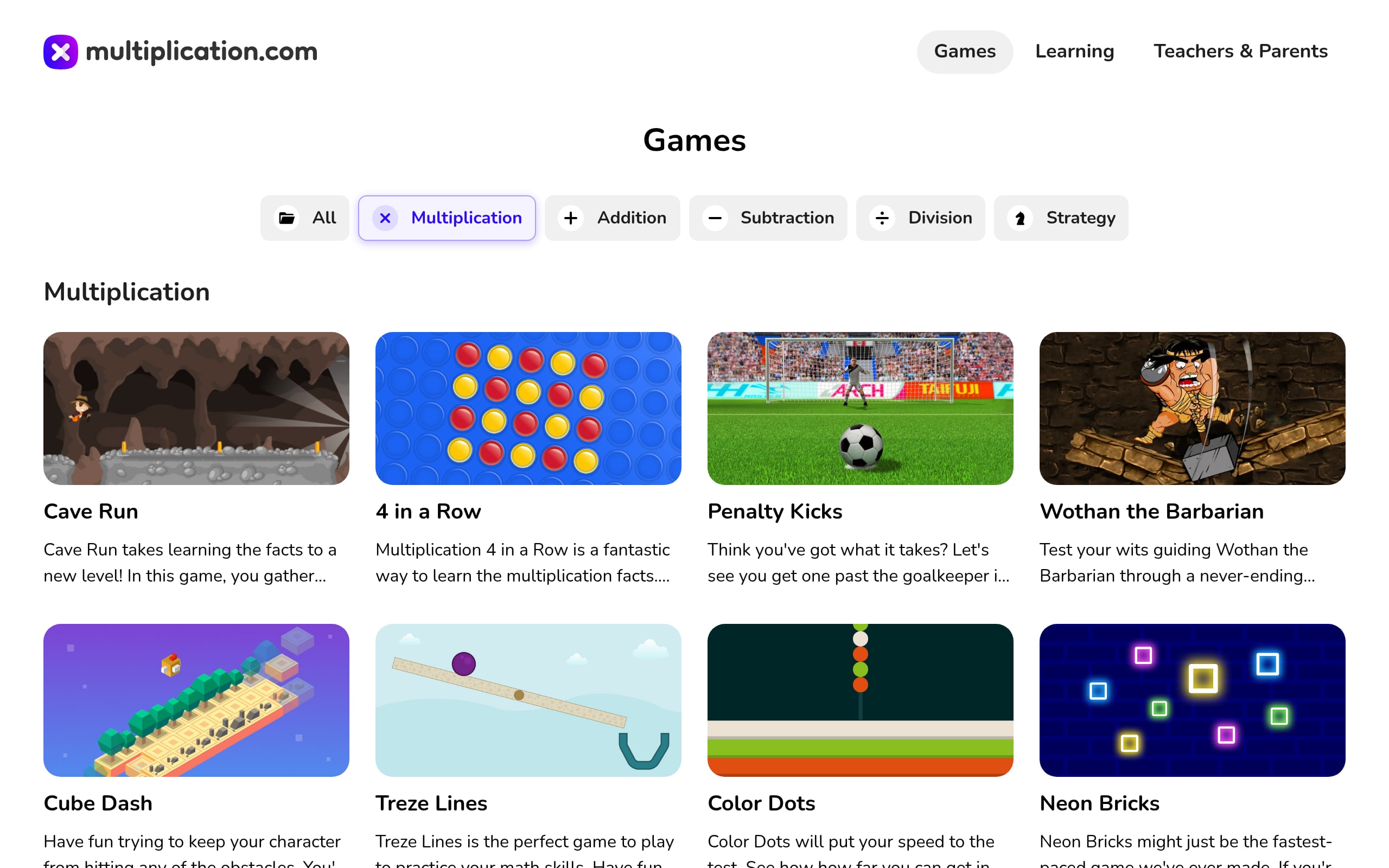
Build instant recall of 0 to 12 facts while keeping motivation high. Best for grades 2 to 5, the aim is to reach 85 to 90 percent accuracy at a brisk pace and explain at least one strategy used to find a product.
Quick Setup
- Internet enabled devices and a teacher vetted site
- Optional headphones; simple score/goal recording sheet
- Pairs or small groups; 15 to 20 minutes
Game Flow
- Model one round and think aloud: "I see 6 × 7. I know 5 × 7 = 35, plus 7 more is 42."
- Students play a 3 to 5 minute round as you circulate and ask, "How did you know 8 × 6 so fast?"
- They record accuracy and time, set a personal target, and name a strategy to try.
- Play a second round aiming to beat the previous score.
- Finish when students meet their accuracy goal or after two rounds; share one fact that felt faster and why.
Differentiate & Document
- Narrow facts to 0 to 5 with a multiplication grid for support; add missing factor modes for challenge.
- Students log scores, times, and one strategy on the recording sheet for quick progress monitoring.
2. Human Body Multiplication

Turn factors into movement so students feel equal groups. Designed for grades 2 to 4, success looks like physically modeling the factors and clearly stating the matching product.
Quick Setup
- Factor cards or dice (0 to 12), floor spots, whiteboard
- Groups of 3 to 4; 10 to 15 minutes
Game Flow
- A student draws two factors (e.g., 6 and 7). Record 6 × 7.
- Treat the first factor as groups and the second as items per group: six "leaders" hold up seven fingers.
- The class skip counts by 7s: 7, 14, 21, 28, 35, 42. Ask, "What does the 6 represent?"
- Option: one student makes 6 jumps, counting by 7s to land on 42.
- Teams earn a point for an accurate model and explanation; rotate roles and repeat until each team reaches three points or time.
Differentiate & Document
- Use smaller factors (0 to 5) or sentence frames; swap jumps with claps/taps for mobility.
- Students jot the equation and a quick sketch or tally model on a sheet.
3. Multiplying Card Game
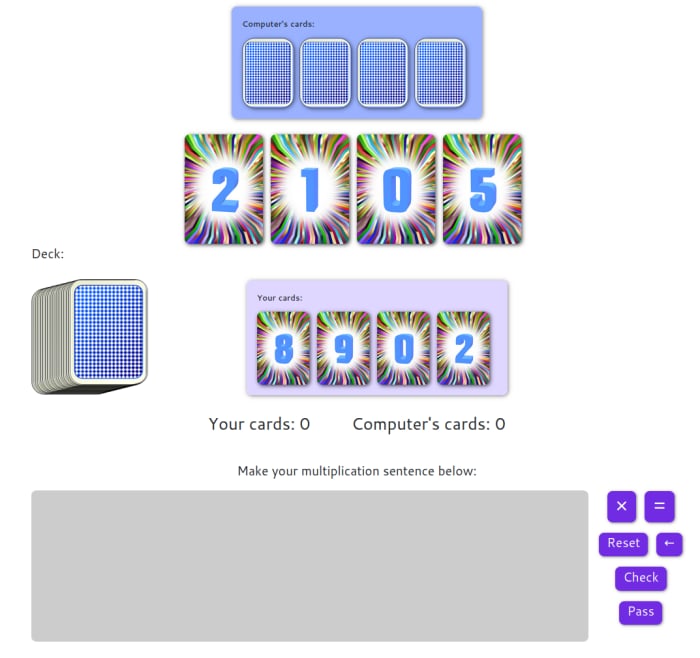
A fast, competitive way to strengthen fact fluency in grades 3 to 5. Players aim to multiply quickly and accurately, collecting the most cards by the end of the round.
Quick Setup
- 1 deck of cards (remove face cards; Ace = 1)
- Mini whiteboards or scratch paper
- Pairs; 10 to 15 minutes
Game Flow
- Each player flips two cards and multiplies. Example: 6 and 7 → "6 × 7 = 42."
- The greater product wins the round and takes all four cards. Prompt: "Check your partner's math, then ask what strategy they used."
- Ties trigger a "war": flip two more cards; the new higher product wins all cards from that battle.
- Continue play for the set time; encourage students to justify a tricky product aloud once per game.
- The winner holds the most cards when time expires.
Differentiate & Document
- Provide a multiplication chart or restrict factors to 2 to 5; for challenge, include J = 11 and Q = 12.
- Students record a few sample equations and winning strategies on a quick sheet.
4. Multiplication Model Make-It
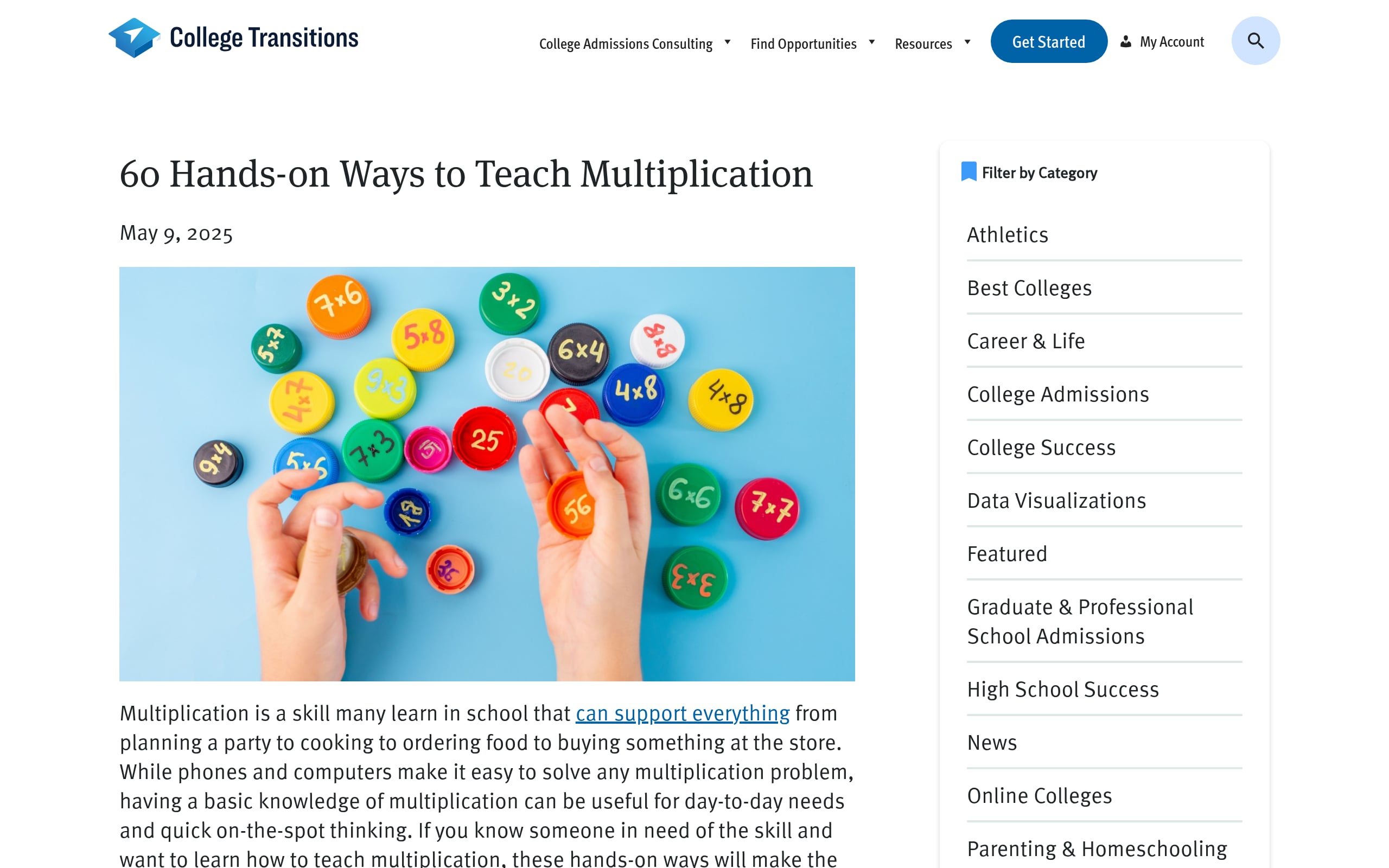
Make multiplicative thinking visible for grades 2 to 4 by building equal groups, arrays, or number lines. Students succeed when their model matches the fact and they can justify the product.
Quick Setup
- Counters, whiteboards/markers, fact task cards, model mats
- Pairs or trios; ~15 minutes
Game Flow
- Draw a fact (e.g., 4 × 3) and choose a representation.
- Build it: four groups of three counters; then write 4 × 3 = 12.
- Partners check and ask, "How does this show four groups of three?"
- Swap roles and represent the same fact a different way (e.g., a 4 by 3 array or a number line of jumps of 3).
- Repeat with new facts until pairs correctly model four equations.
Differentiate & Document
- Start with 2s/5s/10s or ramp to 8s/9s/12s; offer pre drawn arrays or sentence frames.
- Students capture each model with an equation and a one sentence explanation.
5. Multiplication Shake
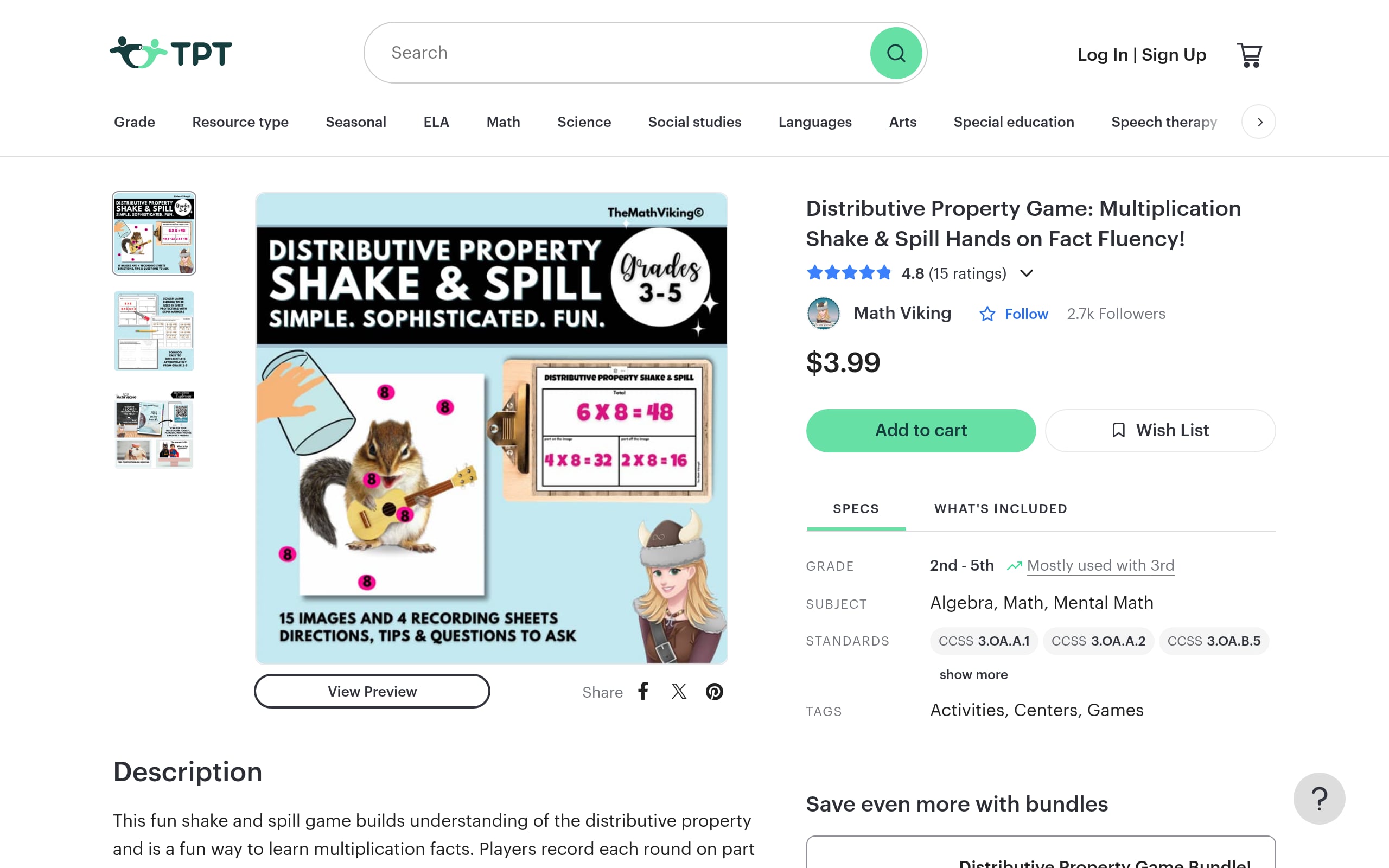
Dice turn into factors as students in grades 3 to 5 model facts with arrays or equal groups. The aim: solve and justify 10 facts in 10 minutes.
Quick Setup
- 2 dice and a small cup per pair; recording sheets or journals
- Pairs; 10 minutes
Game Flow
- Shake and spill two dice (e.g., 6 and 7) to form 6 × 7.
- Both partners write 6 × 7 = 42 and draw a matching array or equal groups.
- Compare and initial each other's work if both model and product align.
- Teacher check: "What do the factors represent in your array?"
- Switch and repeat until a player reaches 10 points or the timer sounds.
Differentiate & Document
- Use dice limited to 2 to 6 or add a third die for challenge (compose larger factors).
- Students log equations, models, and totals for a quick look at accuracy and strategy use.
6. Hole-Punch Multiplier
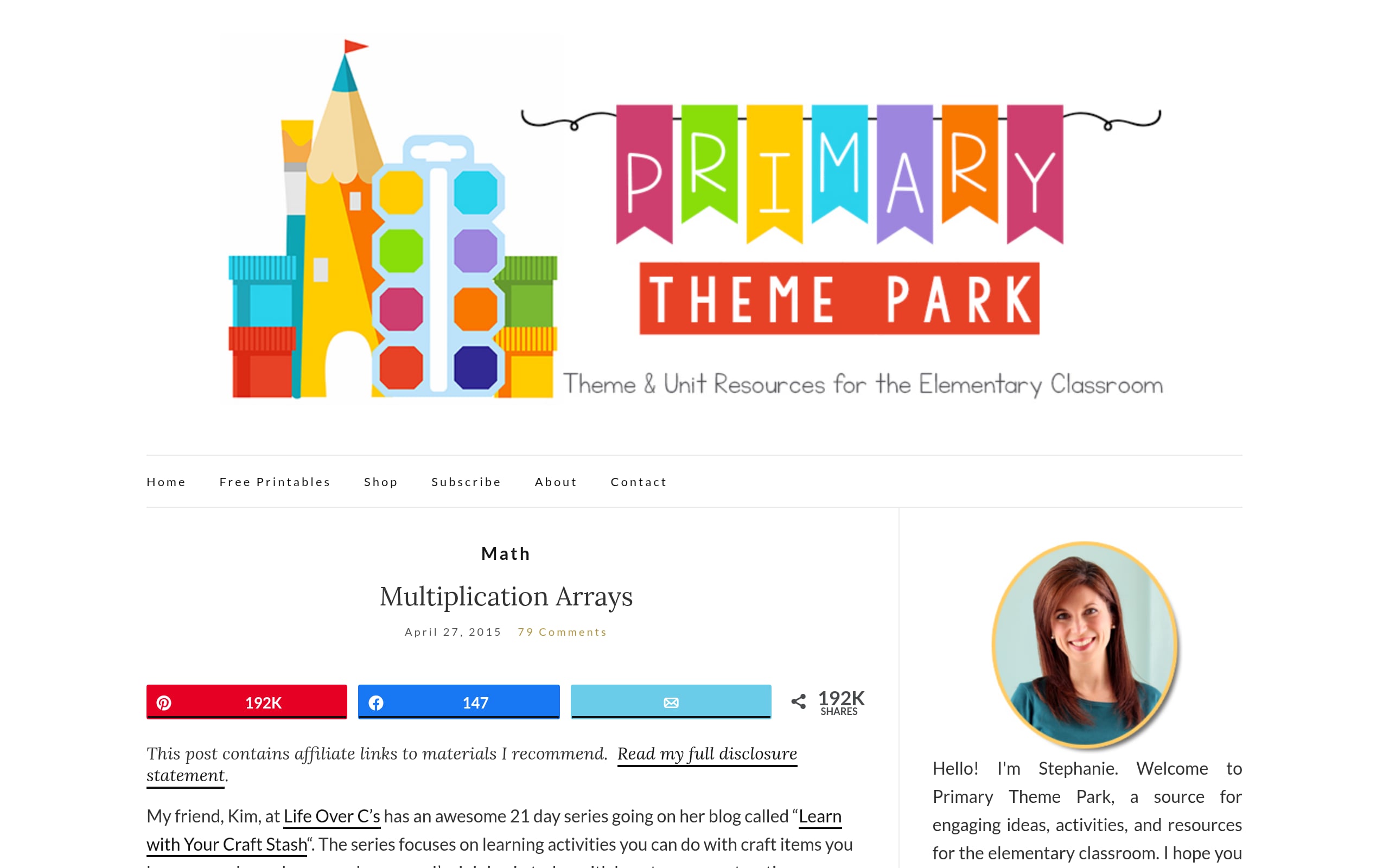
Put arrays in students' hands with a hole punch and grid cards. Ideal for grades 2 to 5, success is building the correct array and explaining how it proves the product.
Quick Setup
- Hole punch, gridded index cards, fact cards
- Pairs or a small center rotation; ~15 minutes; simple recording sheet
Game Flow
- Draw a fact card to set array dimensions.
- Treat the first factor as rows, second as holes per row. For 6 × 7, punch 6 rows of 7.
- Find the product (42) by skip counting rows or adding equal groups; ask, "How does your array show equal groups?"
- Partner verify or check with a facts chart, then log 6 × 7 = 42.
- The first pair to accurately complete five arrays wins the round.
Differentiate & Document
- Start with up to 5 × 5 or provide pre marked grids; extend to 8s/9s for challenge.
- Record each array with its equation and a brief verification note.
7. Multiplication Museum
Students become curators, displaying one fact in multiple forms to deepen understanding. For grades 3 to 5, success means clearly representing the fact and explaining the reasoning behind each model.
Quick Setup
- Index cards, paper, markers, counters; gallery walk recording sheet
- Pairs or small groups; 35 to 60 minutes
Game Flow
- Assign or choose a fact (e.g., 6 × 7).
- Create at least two models: a 6 by 7 array and 6 groups of 7.
- Write an exhibit label with the equation (6 × 7 = 42) and a brief explanation.
- Teacher prompt: "Where do you see each factor in your model?"
- One partner serves as docent while the other tours; switch roles and complete the gallery walk.
Differentiate & Document
- Offer 2s/5s for support; challenge students to show the commutative property.
- Visitors note one new insight per exhibit on the recording sheet.
8. Twister Multiplication

Get kinesthetic with fact fluency as students connect called facts to labeled products. Designed for grades 3 to 5, success is placing the correct limb on the correct product without toppling.
Quick Setup
- Twister mat labeled with products; multiplication fact cards or dice
- Spinner for limbs; groups of 2 to 4; 10 to 15 minutes
Game Flow
- Spread product labels across the mat; shuffle fact cards.
- Caller draws a fact (e.g., 6 × 7) and spins for a limb (Right Hand).
- The player places that limb on 42. Quick check: "How do you know 6 × 7 is 42?"
- Play passes; a strike is an incorrect product or a fall. Three strikes and you're out.
- Continue until one player remains or time is up.
Differentiate & Document
- Limit to 2s/5s/10s; for challenge, require a related division fact before moving.
- Students record a few solved facts on a whiteboard or exit ticket.
9. Multiplication Mix-Up
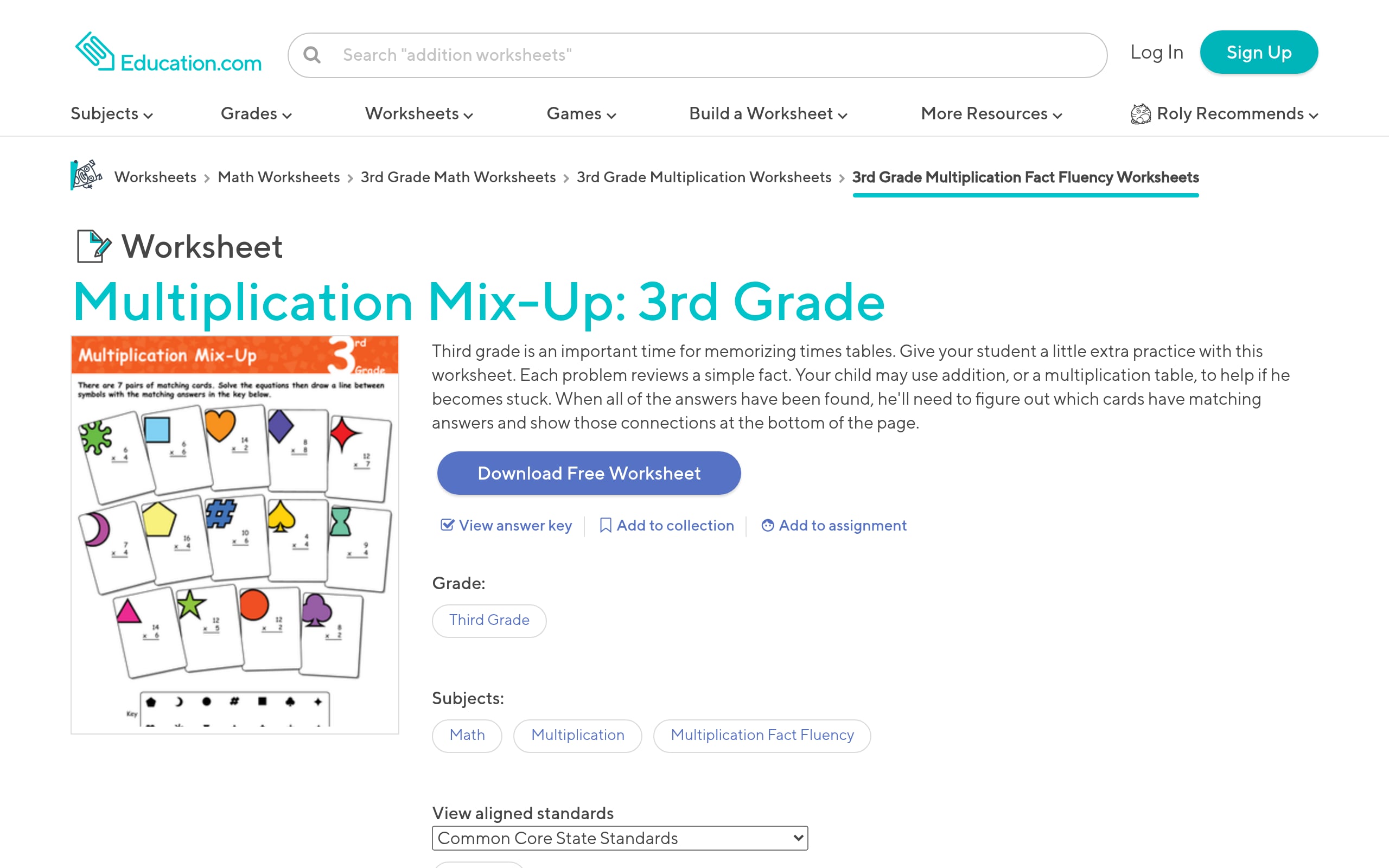
A strategic match up for grades 3 to 5: pair equation cards to the correct products and defend your thinking. The goal is accurate matching with clear verbal strategy use.
Quick Setup
- Fact cards (e.g., 6 × 7) and product cards (e.g., 42); player tokens
- Pairs or trios; 15 minutes; printable tracking sheet
Game Flow
- Arrange a 4×4 grid of product cards face up.
- Draw a fact (6 × 7), solve aloud, and claim the matching product with your token.
- Keep the fact card if correct; peers can ask, "Explain how you knew."
- Each product can be claimed once; if disputed, rework together on a whiteboard.
- When time ends, the player with the most claimed matches wins.
Differentiate & Document
- Use 2s/5s/10s for support; add missing factor cards for a challenge.
- Students record equations they claimed and one strategy note per turn.
10. Multiplication Cup Towers

From arrays to vertical stacks, students in grades 2 to 4 physically model equal groups. Success is building a structure that matches the fact and explaining how it proves the product.
Quick Setup
- Stackable cups and multiplication fact cards (0 to 12)
- Pairs; ~15 minutes; simple recording sheet
Game Flow
- Draw a fact (6 × 7) and build a flat array: 6 rows of 7 cups.
- Stack each column into towers, creating 7 towers with 6 cups each.
- Ask, "What does each tower represent? How many towers are there?"
- Verify the total by skip counting or grouping: 6, 12, 18… 42. Record 7 × 6 = 42.
- Complete and record two different facts before time ends.
Differentiate & Document
- Start with up to 5 × 5 or provide frames/sentence starters; add missing factor prompts for challenge.
- Sketch the model beside each equation on the sheet.
11. Domino Multiplication War
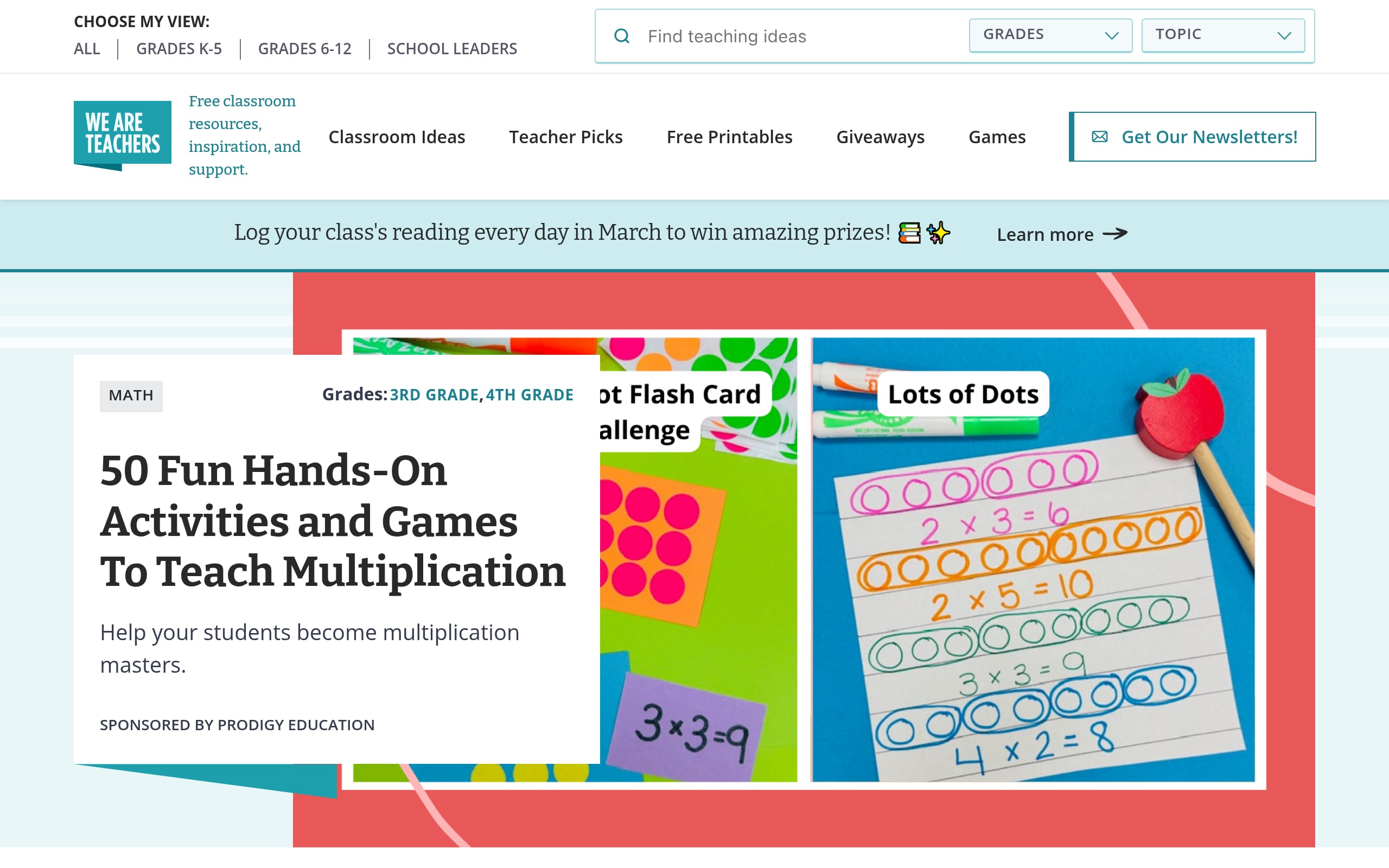
Turn pips into factors in this quick play duel for grades 2 to 4. Players strive to compute products accurately and outscore their partner.
Quick Setup
- One set of double six dominoes per pair; recording sheets or mini whiteboards
- Pairs; 10 to 15 minutes; dominoes face down
Game Flow
- Each player draws one domino and multiplies the pips.
- Example: [3|4] → 3 × 4 = 12; [5|1] → 5 × 1 = 5.
- Higher product takes both tiles. Prompt: "Explain how you found your answer."
- Tie? It's war, so draw again; winner takes all tiles from the round.
- When the pile is empty, the player with the most dominoes wins.
Differentiate & Document
- Support with a multiplication chart or stick to double six; extend with double nine sets.
- Students record equations for sampled rounds and circle their highest product.
12. Have a Ball Multiplying Hard Facts
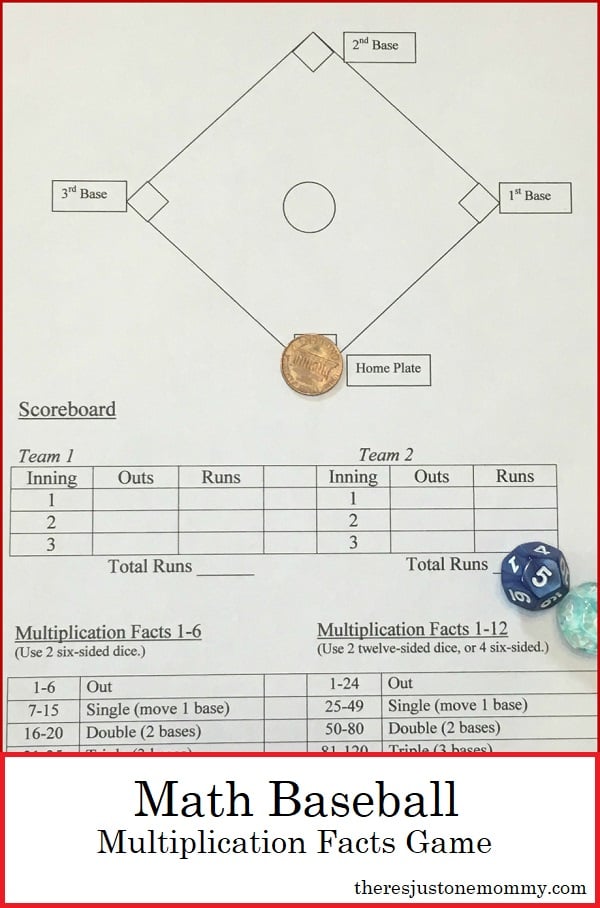
Target those tough 6s to 9s with a rapid response toss game. Perfect for grades 3 to 5, success is correctly stating 10 products within five seconds and naming a strategy.
Quick Setup
- Foam ball labeled 0 to 12; dry erase boards or recording sheets
- Whole class or small groups; 10 to 15 minutes
Game Flow
- Toss the ball; the catcher reads the two numbers under their thumbs.
- State the product within five seconds: "8 and 9—8 × 9 = 72."
- If stuck, request brief think time or a team hint, then try again.
- Keep a brisk rhythm with frequent turns; track class totals on the board.
- Win by meeting a class target (e.g., 40 correct) or by highest points in timed rounds.
Differentiate & Document
- Limit digits (e.g., remove 7 to 9) for support; add 11s/12s for stretch.
- Students note solved equations and one go to strategy on their sheet.
13. Rock, Paper, Multiply!
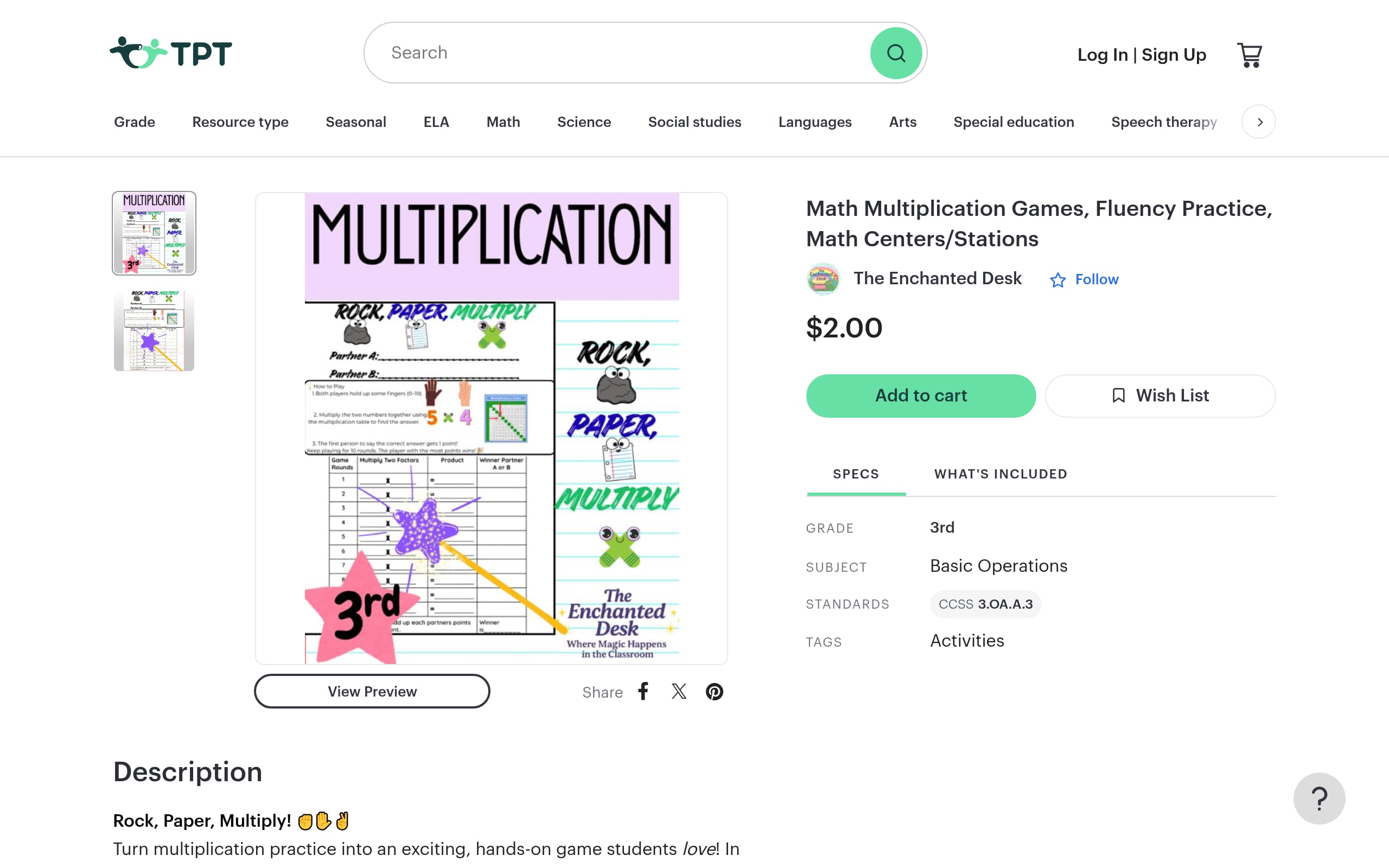
A lightning fast partner game that builds fact fluency in grades 3 to 5. The objective is to solve products accurately and explain at least one efficient strategy during play.
Quick Setup
- Number cards (1 to 12) or student fingers; whiteboards or recording sheets
- Pairs; 5 to 8 minute rounds
Game Flow
- On the chant "Rock, Paper, Multiply!" each player reveals a number (e.g., 6 and 7).
- Race to say the product: "6 × 7 = 42." First correct answer earns a point.
- Teacher prompt: "How did you know so quickly?" Encourage doubling/halving or known fact anchors.
- Play multiple quick rounds; tally points as you go.
- The player with the most points when the timer ends wins.
Differentiate & Document
- Restrict to 2 to 5 with a facts chart; expand to 6 to 9 or include 12 for challenge.
- Record a few equations per round and star the ones solved with a strategy.
14. Multiplication Clue Cards
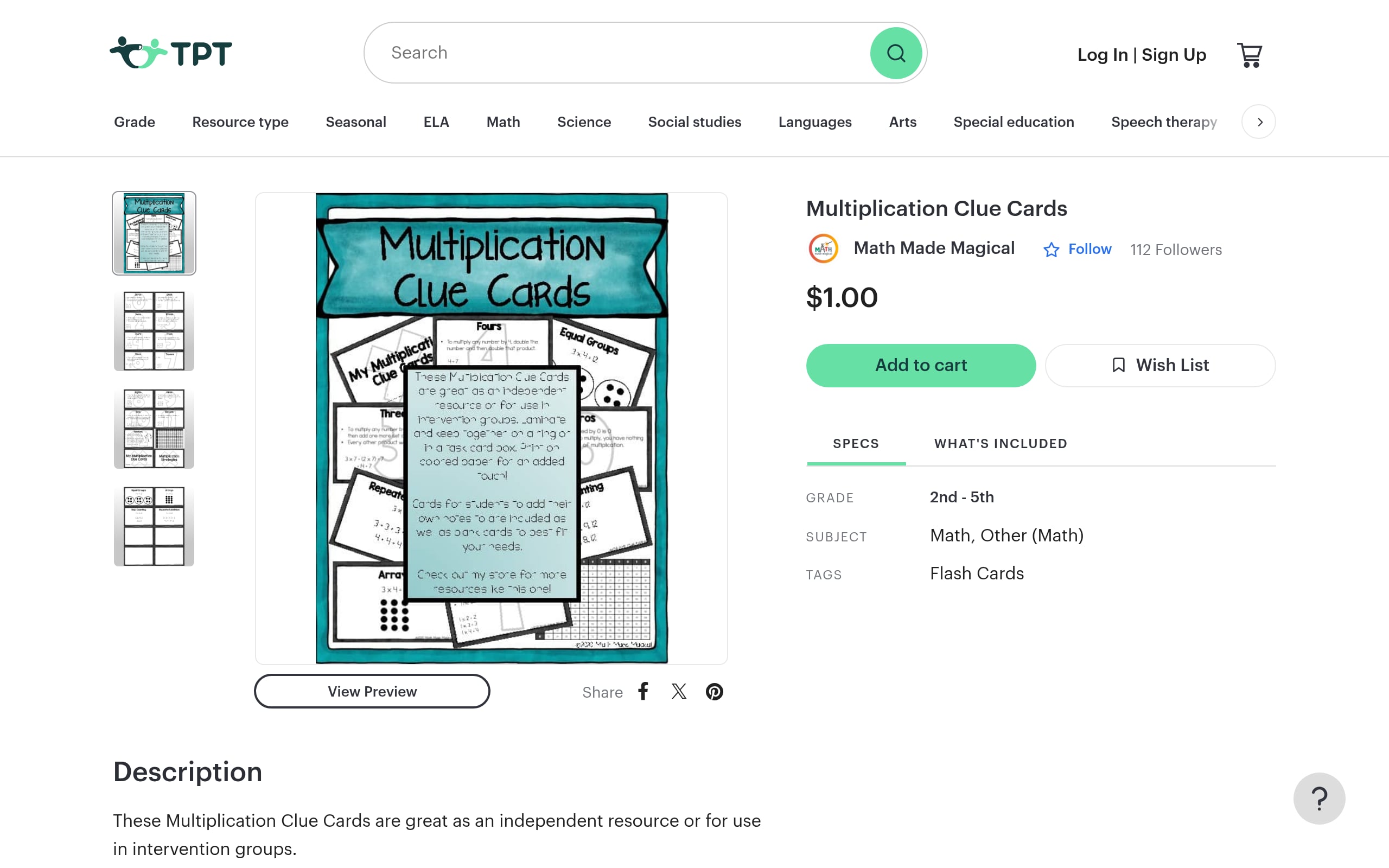
Use logical clues to uncover unknown factors and products, perfect for grades 3 to 5. Success is solving and justifying at least 8 of 10 cards.
Quick Setup
- Multiplication clue cards with answers on back; recording sheets or whiteboards
- Individuals or pairs; ~15 minutes
Game Flow
- Model one: "My product is between 40 and 45. One factor is 6." Conclude 6 × 7 = 42.
- Students rotate to any card, read clues, and write the equation and product.
- Self check by flipping the card; revise work if needed.
- Ask, "Which clue was most helpful and why?" to surface strategy.
- Continue until the target number of cards is solved or time expires.
Differentiate & Document
- Offer simpler facts (2s/5s/10s) or manipulatives; add multi step clues for a challenge.
- Collect recording sheets to verify accuracy and reasoning notes.
15. Multiplication Fact Bingo
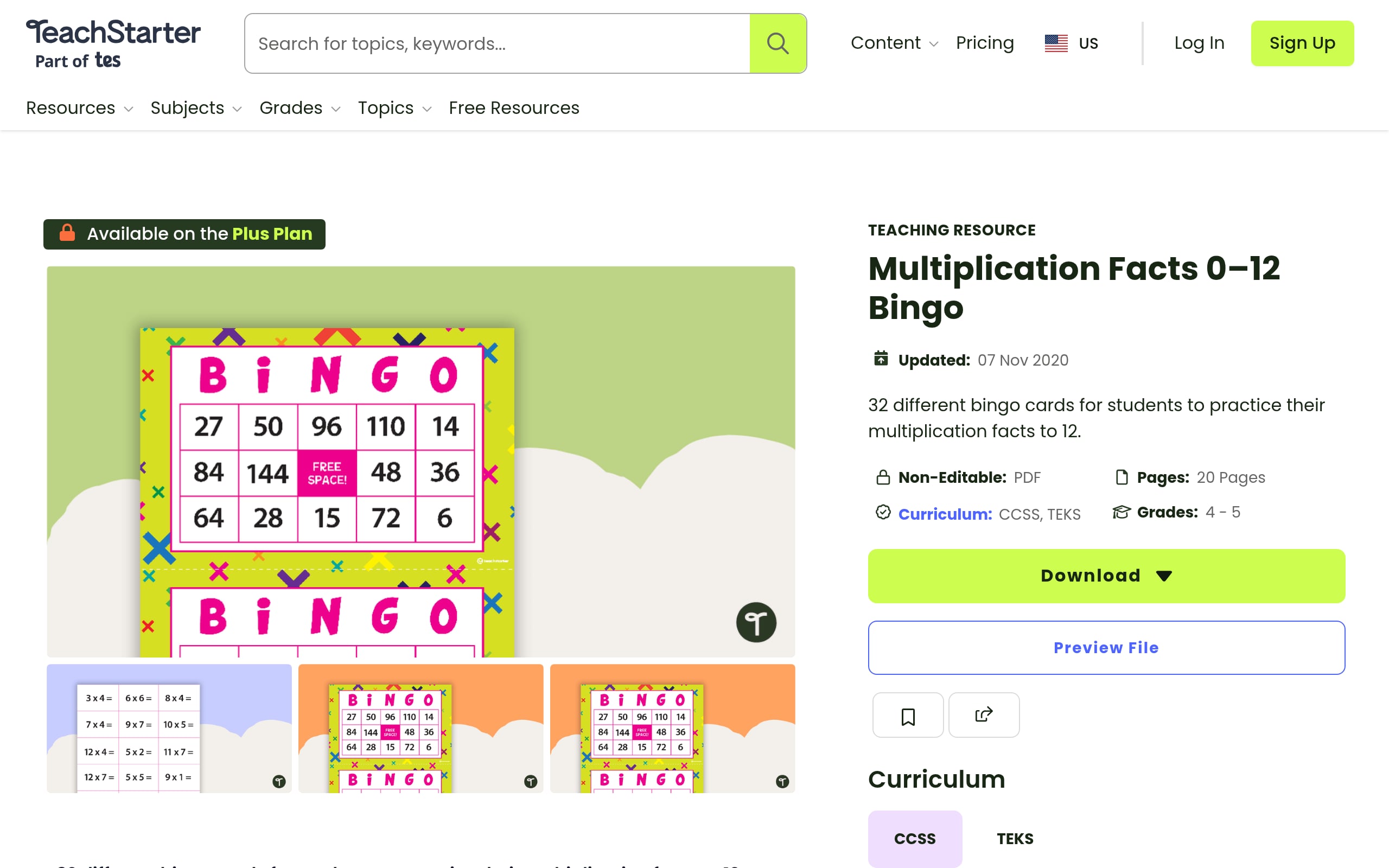
Classic Bingo, but every cover is a product. Tailored to grades 3 to 5, students succeed by identifying products correctly and justifying at least one match.
Quick Setup
- Bingo cards with products; counters; calling cards with facts (e.g., 6 × 7)
- Whole class or small groups; ~15 minutes
Game Flow
- Distribute product Bingo boards and counters.
- Call a fact ("6 × 7"); students find and cover 42 if present.
- Pause to prompt reasoning: "What is 6 groups of 7? Cover that number if you have it."
- First to complete a row, column, or diagonal calls "Bingo!"
- Verify by reading covered products and stating the corresponding facts.
Differentiate & Document
- Limit to 2s/5s or provide a chart; include 11s/12s or missing factor calls for challenge.
- Quick exit ticket: write two called facts and explain one strategy used.
Expanding Skills Beyond Basic Facts
Once students have a solid grasp of their basic facts, they are ready to tackle more complex problems. The next steps involve understanding place value in multiplication and learning a systematic method for solving multi digit calculations.
Multiplying by Multiples of Ten
Understanding how to multiply by multiples of ten (like 10, 20, or 300) is a critical bridge to larger problems. Teach students the simple pattern: multiply the non zero digits, and then add the total number of zeros from the factors to the end of the product. For example, to solve 7 × 30, they can think (7 × 3) with a zero at the end. This becomes 21 with a zero, which is 210. This skill makes estimating and multi digit multiplication much easier.
Introduction to Column Multiplication
For problems that can't be solved mentally, column multiplication is the standard algorithm that provides a reliable structure. This method organizes numbers by place value, ensuring that each part of the multi digit number is multiplied correctly. It is essential to start with smaller problems and gradually increase the difficulty.
- 2-Digit by 1-Digit Multiplication: This is the first step. For a problem like 24 × 3, students multiply the ones digit first (3 × 4 = 12), write down the 2, and carry over the 1. Then they multiply the tens digit (3 × 2 = 6) and add the carried over 1, resulting in 7. The final product is 72.
- 3-Digit and 4-Digit by 1-Digit Multiplication: The process extends logically. For 3-digit by 1-digit multiplication and 4-digit by 1-digit multiplication, students simply repeat the process for the hundreds and thousands place, always working from right to left and carrying over when necessary.
Let's look at a worked example for 345 × 4:
- Set up the problem in columns with the larger number on top.
- Multiply the ones place: 4 × 5 = 20. Write 0 in the ones column and carry the 2 to the tens place.
- Multiply the tens place: 4 × 4 = 16. Add the carried over 2, which gives you 18. Write 8 in the tens column and carry the 1 to the hundreds place.
- Multiply the hundreds place: 4 × 3 = 12. Add the carried over 1, which gives you 13. Write 13 in the hundreds and thousands columns.
- The final answer is 1,380.
Conclusion: From Concrete to Confident, Next Steps
Taking students from counting on their fingers to confidently solving multiplication problems is a journey. It requires a thoughtful approach that prioritizes understanding before memorization. By using the Concrete, Representational, Abstract framework and incorporating a rich variety of engaging multiplication math activities into your classroom, you can build resilient, flexible, and confident mathematicians. The goal is not just for students to know their facts, but to understand them and be able to use them to solve complex problems.
Ready to reclaim your planning time and create engaging multiplication math activities? Discover how TeachTools can support your classroom.
FAQ
What is the best way to teach multiplication?
The most effective approach is to follow the Concrete, Representational, Abstract (CRA) sequence. Start with hands on manipulatives, move to drawings and models, and finally introduce the abstract numbers and symbols. This ensures students develop a deep conceptual understanding.
How can I make multiplication practice more fun?
Incorporate games, puzzles, and technology. Card games, dice games, and interactive online platforms can make practice feel less repetitive. Using varied multiplication math activities keeps students engaged and motivated.
How often should students practice multiplication facts?
Short, consistent practice sessions are more effective than infrequent, long ones. Aim for 5 to 10 minutes of focused practice daily to help students build and maintain fluency without feeling overwhelmed.
Are worksheets bad for learning multiplication?
Worksheets are not inherently bad, but they should not be the only tool you use. They are best for independent practice after a concept has been taught and understood. A healthy balance of hands on activities, games, and targeted worksheets is ideal.
Can AI help me create multiplication math activities?
Absolutely. AI platforms designed for educators, such as TeachTools, can generate an endless supply of unique multiplication math activities, including customized worksheets, quizzes, word problems, and even puzzles, all aligned to your specific grade level and topic.
What are some good hands on multiplication math activities?
Using base ten blocks to build arrays, playing multiplication war with a deck of cards, rolling dice and multiplying the numbers, and using counters to model equal groups are all excellent hands on activities that build foundational understanding.