Day of the Dead for Teachers: 2026 Guide & Activities
TL;DR
The Day of the Dead (Día de los Muertos) is a Mexican holiday celebrated on November 1 and 2 that honors deceased loved ones through ofrendas, marigolds, sugar skulls, and shared meals. Its roots stretch back over 3,000 years to Aztec and Mesoamerican rituals, later blended with Catholic traditions after Spanish colonization. It is not “Mexican Halloween.” For teachers, this holiday offers rich cross-curricular opportunities in language arts, social studies, art, and science, but it requires culturally sensitive framing.
Quick Definition
Día de los Muertos, or Day of the Dead, is a holiday traditionally celebrated on November 1 and 2 in Mexico and increasingly across the United States and other countries. November 1 (Día de los Angelitos) honors children and infants who have died, while November 2 is dedicated to adults. Some regions extend the observance to include October 28 through November 2, with specific days set aside for those who died tragic deaths, those who drowned, and souls without living family to remember them.
The holiday centers on the belief that the boundary between the living and the dead thins during this period, allowing spirits to return and visit their families. Far from morbid, it’s a joyful, colorful celebration of memory and continuity. In 2008, UNESCO inscribed the Day of the Dead on its Representative List of the Intangible Cultural Heritage of Humanity, recognizing its deep spiritual and cultural significance to Indigenous communities in Mexico.
For K-12 teachers, this holiday sits at the intersection of history, language, art, and social-emotional learning. If you’re looking to build a full lesson plan around the topic, understanding the cultural foundation is the essential first step.
Origins and History
Mesoamerican Roots
The roots of the Day of the Dead stretch back roughly 3,000 years to pre-Columbian Mesoamerica. The Nahua peoples, including the Aztec and Maya, didn’t view death as an ending. They saw it as a natural phase of life, and they held month-long rituals (originally in August) to honor their deceased loved ones.
Central to Aztec belief was the journey to Mictlán, the underworld. After death, a person’s soul was thought to travel through Chicunamictlán, the Land of the Dead, a passage that took several years and spanned nine levels. Families played an active role in helping their loved ones complete this journey, leaving offerings of food, water, tools, and personal objects to nourish and guide the spirits along the way.
Spanish Colonization and Catholic Syncretism
When the Spanish conquered the Aztec empire in the 16th century, Catholic missionaries attempted to eliminate Indigenous death rituals. Instead of disappearing, the traditions adapted. The Catholic Church moved Indigenous celebrations to align with All Saints’ Day and All Souls’ Day on November 1 and 2. The result was a syncretic blend: pre-Hispanic beliefs about death as continuation fused with Catholic practices of praying for the souls of the departed.
It’s worth noting that Mexican academics remain divided on this history. Some argue the holiday has genuine pre-Hispanic roots, while others contend it’s largely a 20th-century rebranding of Spanish traditions, developed during the presidency of Lázaro Cárdenas to encourage Mexican nationalism through an “Aztec” identity. This academic debate rarely surfaces in classroom materials, but it’s a useful reminder that cultural traditions are living, evolving things.
Modern Globalization
The Day of the Dead gained massive global visibility through two pop-culture moments. In 2015, the James Bond film Spectre featured a large Day of the Dead parade in Mexico City. The scene was fictional, but it inspired Mexico City to hold its first real parade for the holiday in 2016. Two years later, Pixar’s Coco (2017) brought Día de los Muertos into living rooms worldwide, grossing over $800 million and winning an Oscar, a Golden Globe, and a BAFTA.
In the United States, where more than 68 million people identify as being of partial or full Mexican ancestry as of 2024, the holiday has become an important cultural touchstone, particularly in states with large Latino populations. This is exactly why teaching about the Day of the Dead with accuracy and respect matters so much in American classrooms.
Day of the Dead vs. Halloween: Key Differences
This is the single most common point of confusion, and it comes up constantly in classrooms. Practitioners on educator forums report that students routinely describe Día de los Muertos as “Mexican Halloween,” which is inaccurate and reductive. As one middle school Spanish teacher on Roots ConnectED noted, this misconception is so persistent that it requires a deliberate shift in teaching approach.
Here’s what actually separates them:
| Aspect | Day of the Dead | Halloween |
|---|---|---|
| Origin | Aztec/Mesoamerican + Catholic syncretism | Celtic Samhain + Catholic All Hallows’ Eve |
| Dates | November 1-2 | October 31 |
| Tone | Joyful celebration and remembrance | Spooky, mischievous, playful |
| Focus | Honoring specific deceased loved ones | Warding off evil spirits; secular fun |
| Key symbols | Sugar skulls, marigolds, ofrendas | Jack-o-lanterns, costumes, candy |
| View of death | Death as a continuation of life | Death as something fearful |
While both holidays share ancient roots connected to the boundary between the living and the dead, and both fall close together on the calendar, they are fundamentally different in purpose and spirit. A compare-and-contrast writing prompt built around this table works well for ELA classes. Teachers looking to save time on creating that kind of material can generate custom worksheets in minutes rather than building them from scratch.
For a deeper look at teaching cultural topics with similar sensitivity and depth, you might also find our guide to Black History Month activities useful.
Key Terms and Symbols
Explore 26 free AI tools for teachers
Browse All Tools →No single competing resource bundles all the essential Spanish vocabulary into one scannable reference. This glossary block gives teachers (and students) a quick-reference tool for the most important Day of the Dead terms.
| Term | Pronunciation | Meaning |
|---|---|---|
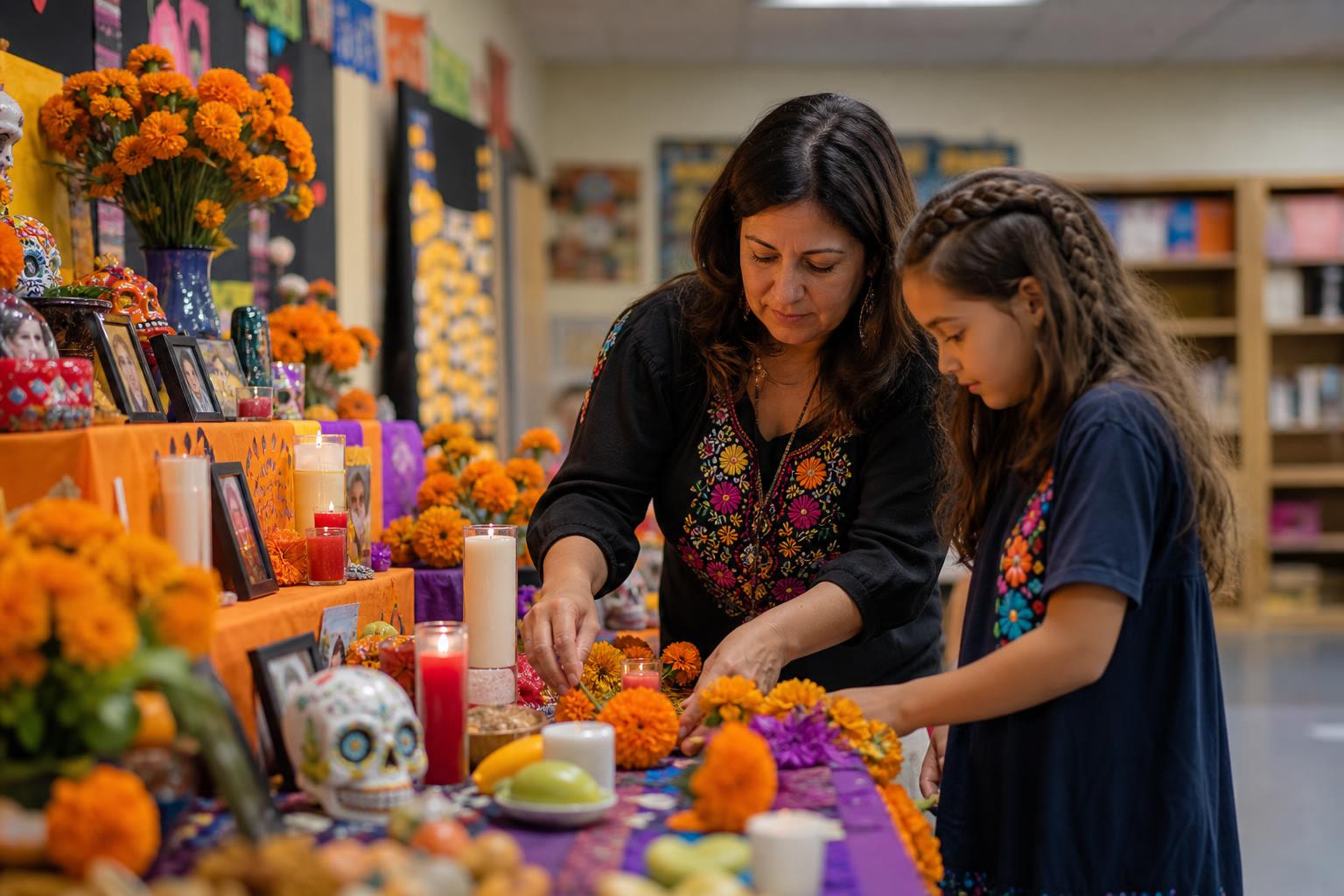
| Ofrenda | oh-FREN-dah | A home-built altar and memorial decorated with family photos, favorite foods, candles, and personal items of deceased loved ones. The central element of the celebration. |
| Cempasúchil | sem-pah-SOO-cheel | Mexican marigold. Its vivid orange color and strong scent are believed to guide spirits back home. One of the most recognizable Day of the Dead symbols. |
| Calavera | kah-lah-VEH-rah | Decorative sugar skulls, often with the name of the deceased written on the forehead. At the most basic level, they represent a departed spirit. Also refers to short, humorous poems written about the living. |
| Calaca | kah-LAH-kah | Whimsical skeleton figures often depicted doing everyday activities like playing music, dancing, or riding a bicycle. |
| La Catrina | lah kah-TREE-nah | An iconic female skeleton in elegant clothing, originally created by artist José Guadalupe Posada around 1910. The etching was a critique of Mexicans who adopted European fashions over their own heritage. Now the most famous visual symbol of the holiday. |
| Pan de muerto | pahn deh MWEHR-toh | A special sweet bread baked for the occasion, often shaped with bone-like decorations on top, symbolizing the cycle of life and death. |
| Papel picado | pah-PEL pee-KAH-doh | Decoratively cut paper banners representing the wind. Used across Mexican holidays but especially prominent during Día de los Muertos. |
| Copal | koh-PAHL | An aromatic tree resin burned as incense. The word comes from the Náhuatl word “copalli” meaning “incense.” Used in Mesoamerican ceremonies for thousands of years and still burned during Day of the Dead rituals. |
| Mictlán | meek-TLAHN | The Aztec underworld, the final resting place for souls after a multi-year journey through nine levels. |
| Día de los Angelitos | DEE-ah deh lohs ahn-heh-LEE-tohs | “Day of the Little Angels,” November 1, the day dedicated to deceased children and infants. |
| Xoloitzcuintli | shoh-loh-eets-KWEENT-lee | An ancient Mexican hairless dog breed believed to help spirits cross the Chiconauhuapan river to reach the underworld. Featured prominently in Coco. |
The Four Elements of the Altar
Every ofrenda traditionally incorporates all four elements of life. Water is placed in a glass or pitcher. Food represents earth. A candle provides fire. And papel picado, moving gently in the breeze, represents wind. In some regions, a single candle is lit for each honored soul, while in others, four candles mark the cardinal directions.
The Monarch Butterfly Connection
Here’s a detail that opens up powerful science connections: monarch butterflies are believed to hold the spirits of the departed. This isn’t random. The first monarch butterflies arrive in Mexico for their winter migration each fall around November 1, which coincides exactly with Día de los Muertos. For teachers who want cross-curricular material, the monarch migration is a natural bridge between cultural studies and biology.
These vocabulary terms work beautifully as the basis for a vocabulary bingo game or a matching activity that reinforces both Spanish language skills and cultural knowledge.
Teaching Day of the Dead Respectfully
Cultural sensitivity isn’t optional here. It’s the difference between meaningful education and casual appropriation. Teachers across online communities have shared hard-won insights about getting this right.
Frame It as Cultural Study, Not Celebration
The most important principle: teach about the Day of the Dead rather than simulating it. Commenters on MetaFilter, discussing how to approach Día de los Muertos at a predominantly non-Latino school, suggested setting it in a larger context of “international festivals of the dead.” As one commenter put it, “a teaching unit on Dia de los Muertos as a cultural unit would be far more appropriate, discussing the symbolism, learning some Spanish words and phrases, learning the meaning behind the holiday.”
PBS Education echoed this framing, recommending that schools use Día de los Muertos as a time to teach students how to be culturally sensitive, discover their own ancestral traditions related to death, and support the Latinx community. They specifically called out the need to clarify the common misconception that it’s simply Mexican Halloween.
Involve Student Voices
A teacher at Heritage Academy noted that because so many of their scholars have Hispanic backgrounds and deep personal knowledge of Day of the Dead, lessons now focus on history and culture rather than arts and crafts. When students with heritage connections share their family traditions, the learning is richer and more authentic than anything a worksheet can provide.
Prepare for Opt-Outs
The practitioner behind SpanishMama.com flagged a reality many teachers face: some families object to learning about Day of the Dead. Reasons vary, from discomfort with images of skulls and skeletons to confusing it with Halloween to cultural or religious beliefs that treat death as taboo. Having alternatives ready (a monarch butterfly migration unit, a broader “how cultures honor loved ones” study) is practical and respectful.
For teachers navigating these conversations with families, a well-crafted parent communication email explaining the cultural and educational purpose of the unit can go a long way toward building understanding and trust.
Cross-Curricular Connections
The Day of the Dead isn’t just a social studies topic. It connects naturally to:
- ELA: Reading comprehension passages, compare/contrast essays, vocabulary building, calavera poetry writing
- Art: Sugar skull design, papel picado cutting, ofrenda construction
- Science: Monarch butterfly migration, marigold botany, copal resin chemistry
- World Languages: Spanish vocabulary, pronunciation practice, bilingual texts
- Social-Emotional Learning: Conversations about grief, memory, family traditions, and how different cultures approach loss
If you’re working with mixed-ability classrooms, you might also consider differentiated worksheets that let all students engage with the material at their level.
Classroom Activity Ideas
Here are practical activities that align with the cultural study approach outlined above. Each can be adapted for elementary, middle, or high school.
Vocabulary matching worksheet. Use the glossary terms above to create a matching activity pairing Spanish terms with their English definitions and images. This works across grade levels by adjusting the number of terms and the complexity of definitions.
Compare-and-contrast writing prompt. Have students use the Day of the Dead vs. Halloween table as a starting point for a structured essay. Younger students can complete a Venn diagram. Older students can write a full analytical paragraph or essay.
Four elements of the altar analysis. Present students with images of ofrendas and ask them to identify how each of the four elements (water, earth, fire, wind) is represented. This builds visual literacy and cultural comprehension simultaneously.
Calavera poetry. In the Mexican tradition, calaveras literarias are short, humorous poems written about living people, imagining their encounter with death. For upper elementary and middle school, this is a creative writing exercise that blends cultural learning with poetry skills. You might pair it with creative writing prompts for additional inspiration.
Monarch butterfly migration study. Connect the Día de los Muertos belief about monarchs carrying spirits to a science lesson on migration patterns, geography, and conservation.
Day of the Dead quiz. After a reading passage or video, assess student understanding of key facts, vocabulary, and cultural distinctions. A quiz generator can help you create grade-appropriate assessments quickly, whether you need multiple-choice for third graders or short-answer for high schoolers.
Frequently Asked Questions
When is Day of the Dead celebrated?
Day of the Dead is primarily celebrated on November 1 and 2. November 1 (Día de los Angelitos) honors deceased children and infants, while November 2 honors deceased adults. Some regions extend observances from October 28 through November 2, with specific days dedicated to those who died by different causes.
Is Day of the Dead the same as Halloween?
No. While both holidays fall close together on the calendar and both involve themes of death, they have different origins, different purposes, and a fundamentally different relationship to death. Day of the Dead is a joyful celebration of memory rooted in Mesoamerican and Catholic traditions. Halloween originated from Celtic Samhain traditions and tends to frame death as frightening.
What is an ofrenda?
An ofrenda is a home-built altar and memorial created to honor deceased loved ones during Día de los Muertos. It typically includes photos of the deceased, their favorite foods and drinks, candles, marigolds (cempasúchil), copal incense, and personal items. The four elements of life (water, earth, fire, wind) are represented on every traditional ofrenda.
Why are marigolds important on Day of the Dead?
Cempasúchil (Mexican marigolds) have a vivid orange color and a strong, distinctive scent that is believed to guide the spirits of the dead back to their families. The flowers are used to decorate ofrendas, graves, and pathways leading to the home.
Who is La Catrina?
La Catrina is an iconic skeleton figure originally created by Mexican artist José Guadalupe Posada around 1910. The etching depicted a female skeleton in elegant European clothing and was meant as social satire, criticizing Mexicans who adopted European fashions while ignoring their Indigenous heritage. She has since become the most widely recognized visual symbol of Day of the Dead.
How should teachers approach Day of the Dead in the classroom?
The strongest approach is to frame it as cultural study rather than simulation. Teach about the history, vocabulary, and symbolism without asking students to recreate sacred practices. Invite students with heritage connections to share their family traditions. Prepare alternatives for families who may opt out. And always distinguish Día de los Muertos from Halloween explicitly.
What grade levels is Day of the Dead appropriate for?
Day of the Dead can be taught at every grade level with appropriate adjustments. Elementary students might focus on vocabulary, symbols, and the monarch butterfly connection. Middle schoolers can handle compare-and-contrast analysis and the history of cultural syncretism. High school students can explore the academic debate about the holiday’s origins, cultural appropriation, and the role of pop culture in globalizing traditions.
Why did UNESCO recognize Day of the Dead?
UNESCO inscribed the Day of the Dead on its Representative List of the Intangible Cultural Heritage of Humanity in 2008 because of its deep spiritual and cultural significance to Indigenous communities in Mexico. The recognition also noted that the celebration period coincides with the completion of the annual maize cultivation cycle, connecting it to agricultural traditions that are thousands of years old.